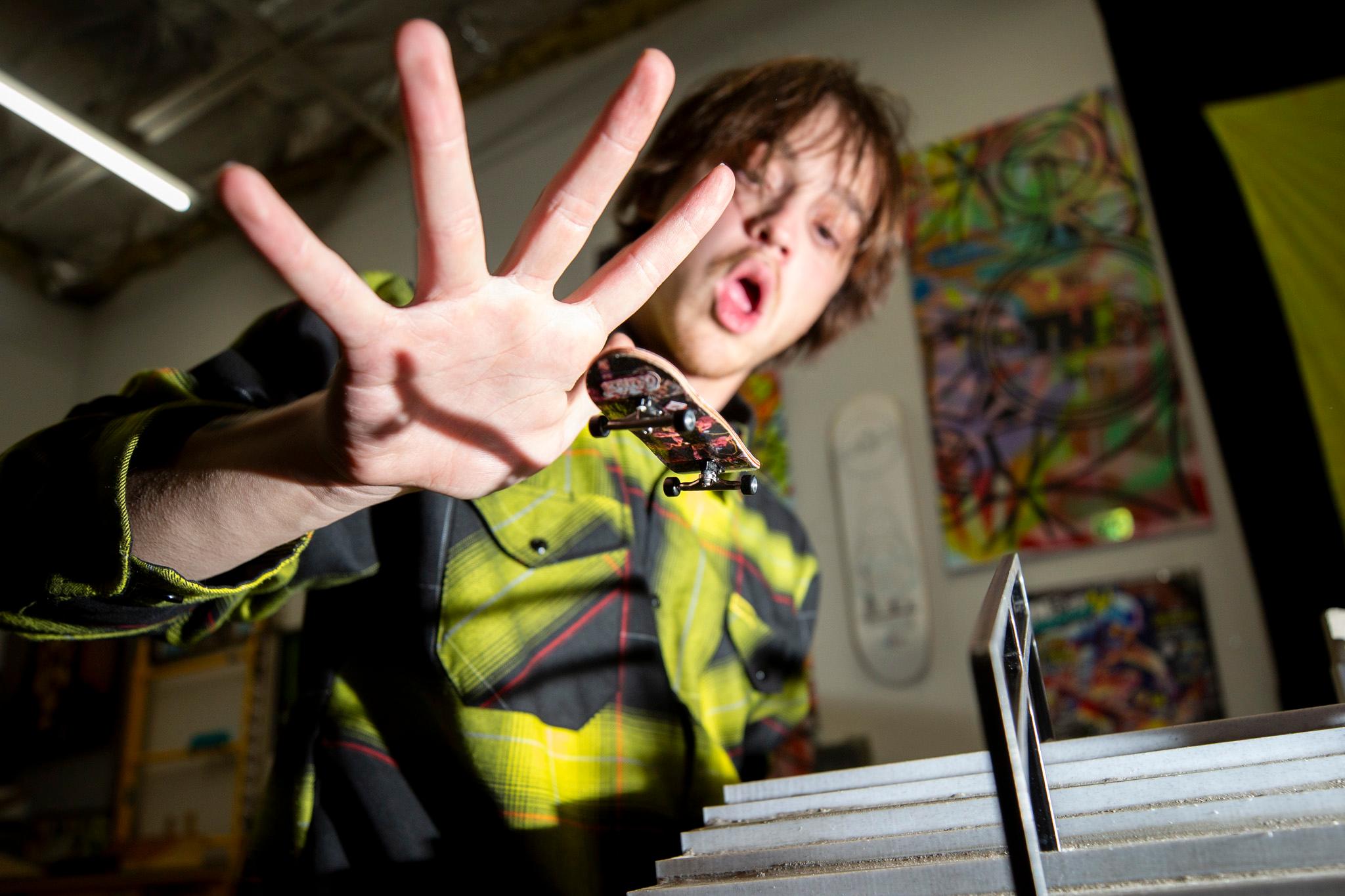
Wander into Lakewood’s 40 West Arts district on a First Friday and you might find your way into something rare in this country: a skatepark fully dedicated to fingerboarding.
We’re talking about tiny skateboards that emerged in the early 2000s. They had a market from the start, but they weren’t always accepted by the larger culture — certainly with adults.
The big brand that kicked off this cultural moment was Tech Deck, something this 30-something reporter remembers took over his middle school an age ago.
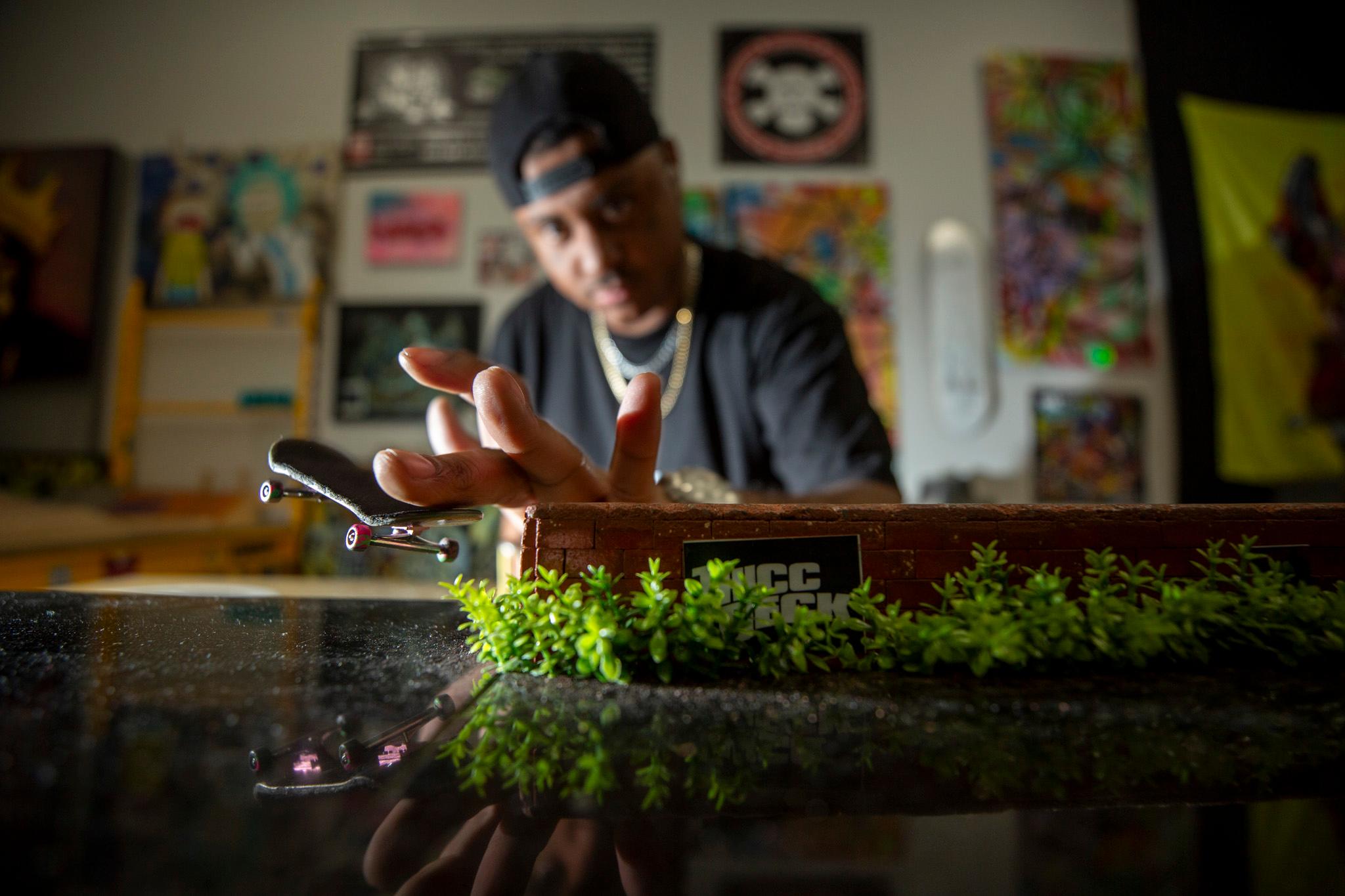
But fingerboarding has found a renaissance in the age of Instagram, and this miniature trick spot is part of a movement to show these boards are more than just toys.
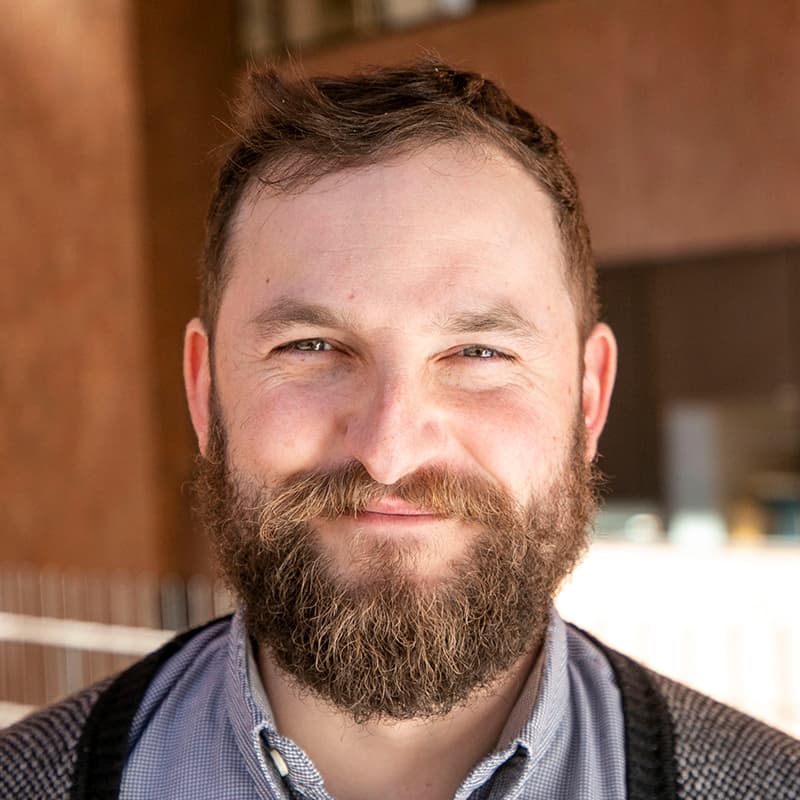
Mike "Cube" Sherrill, owner of the skatepark and printshop TH!S Art, Print & Design, invited us to see what it’s all about.
Sherrill was into fingerboarding before it was cool, and he was well aware it wasn’t.
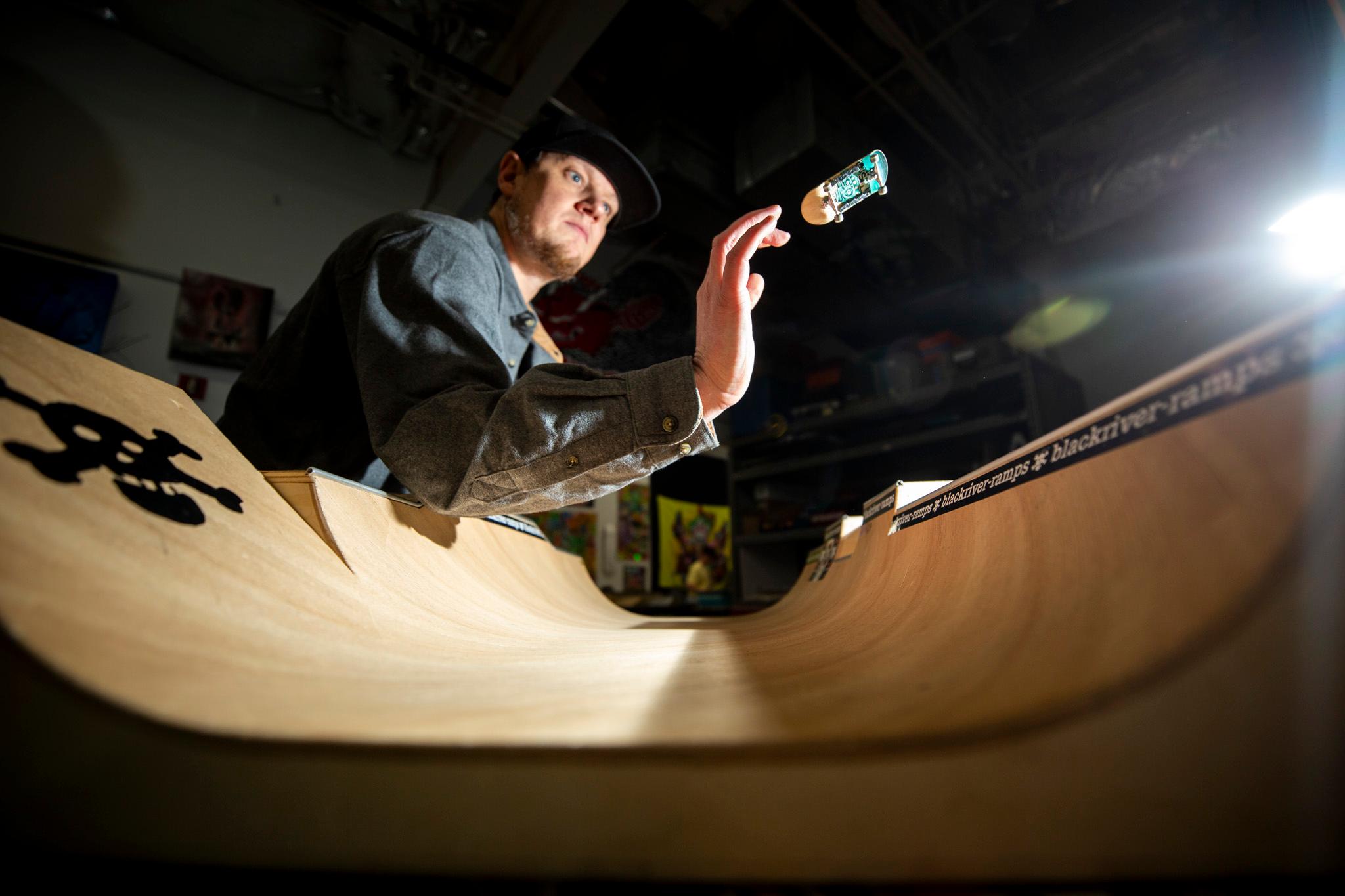
The boards are small, Sherrill is quick to tell anyone, but the tricks are real. It takes practice to land a basic ollie, let alone anything more complicated, just like it does with a full-size deck. It was something he practiced quietly at home, or at his desk, before he learned there were others like him.
“All my close friends knew, but I wasn't taking it out at a concert, or at a restaurant, or at a park,” he remembered. “I didn't tell anybody about it.”
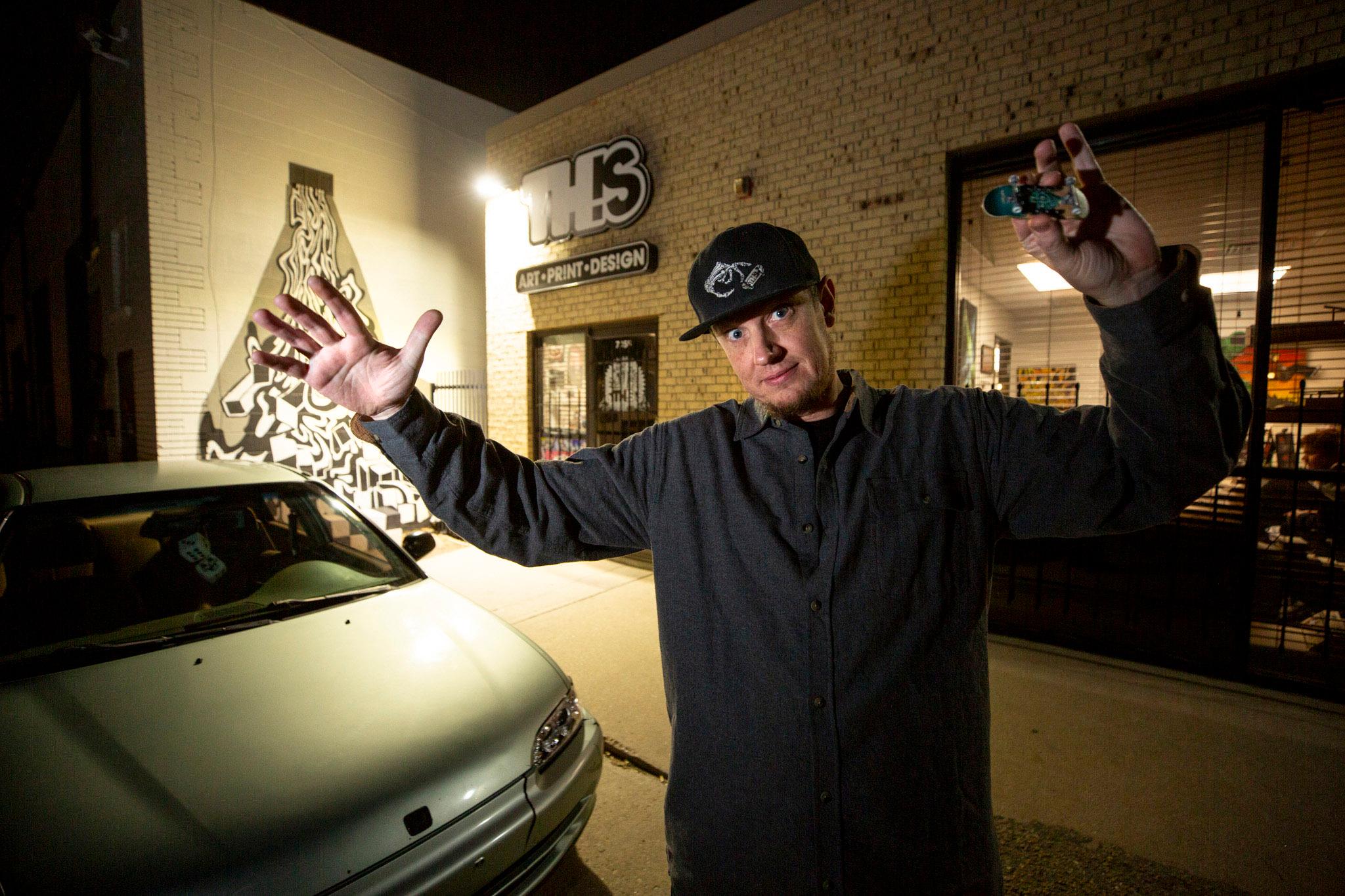
Sherrill, an artist and designer, said he was a lone ranger, flipping and grinding in isolation, until one day, over a decade ago, when he saw advertisements for a meet-up in Fairplay, Colo. He knew he had to go.
“I had no idea what to expect,” he said. “It was probably maybe 25 or 30 people. But that, to me, was crazy. There were kids, but there were also a lot of people my age and older dudes — and with all these good setups and everybody's playing with fingerboards.”
“I am just blown away. I thought I was pretty good,” he remembered. “And then I'm seeing these guys that were good.”
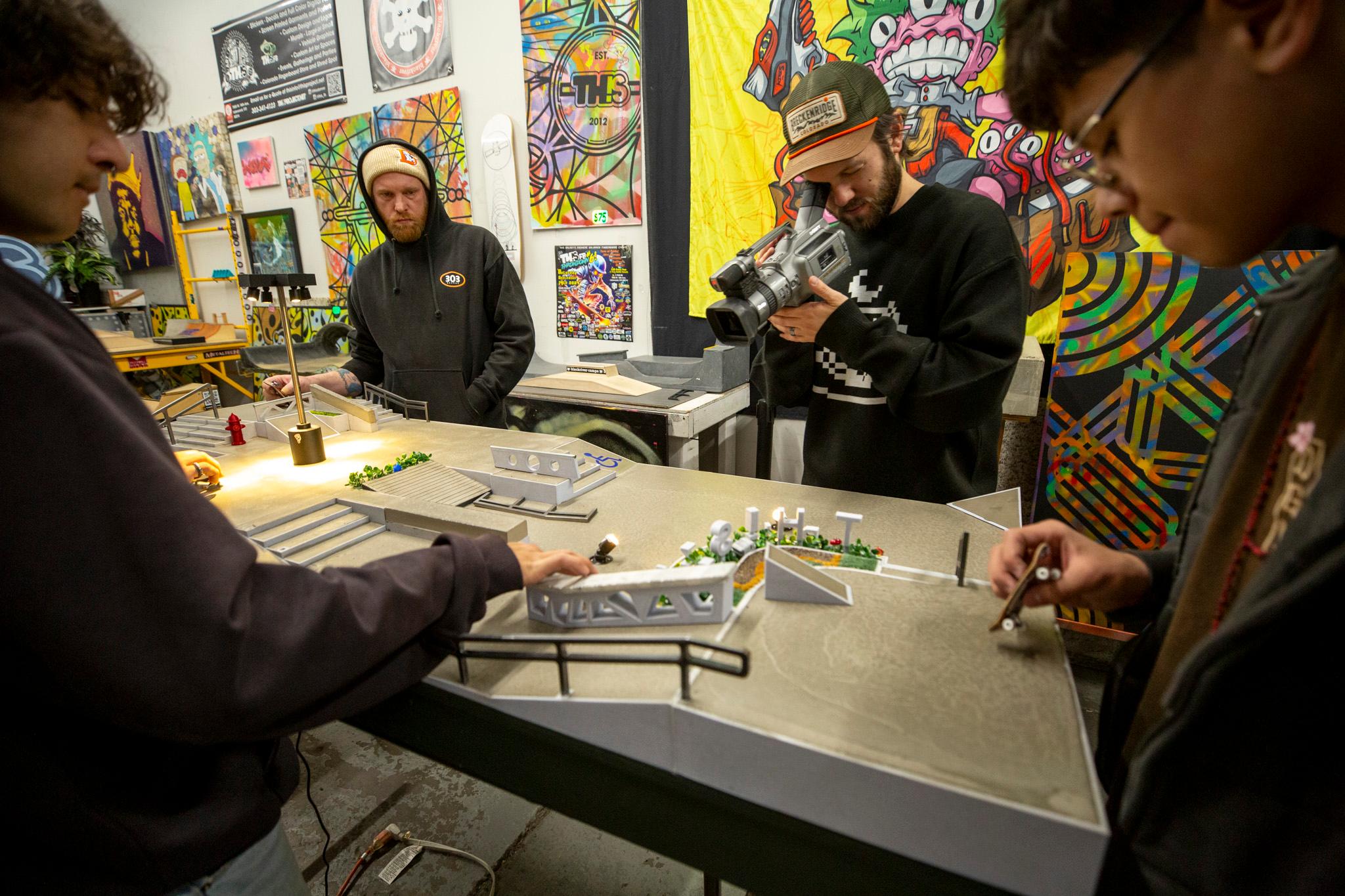
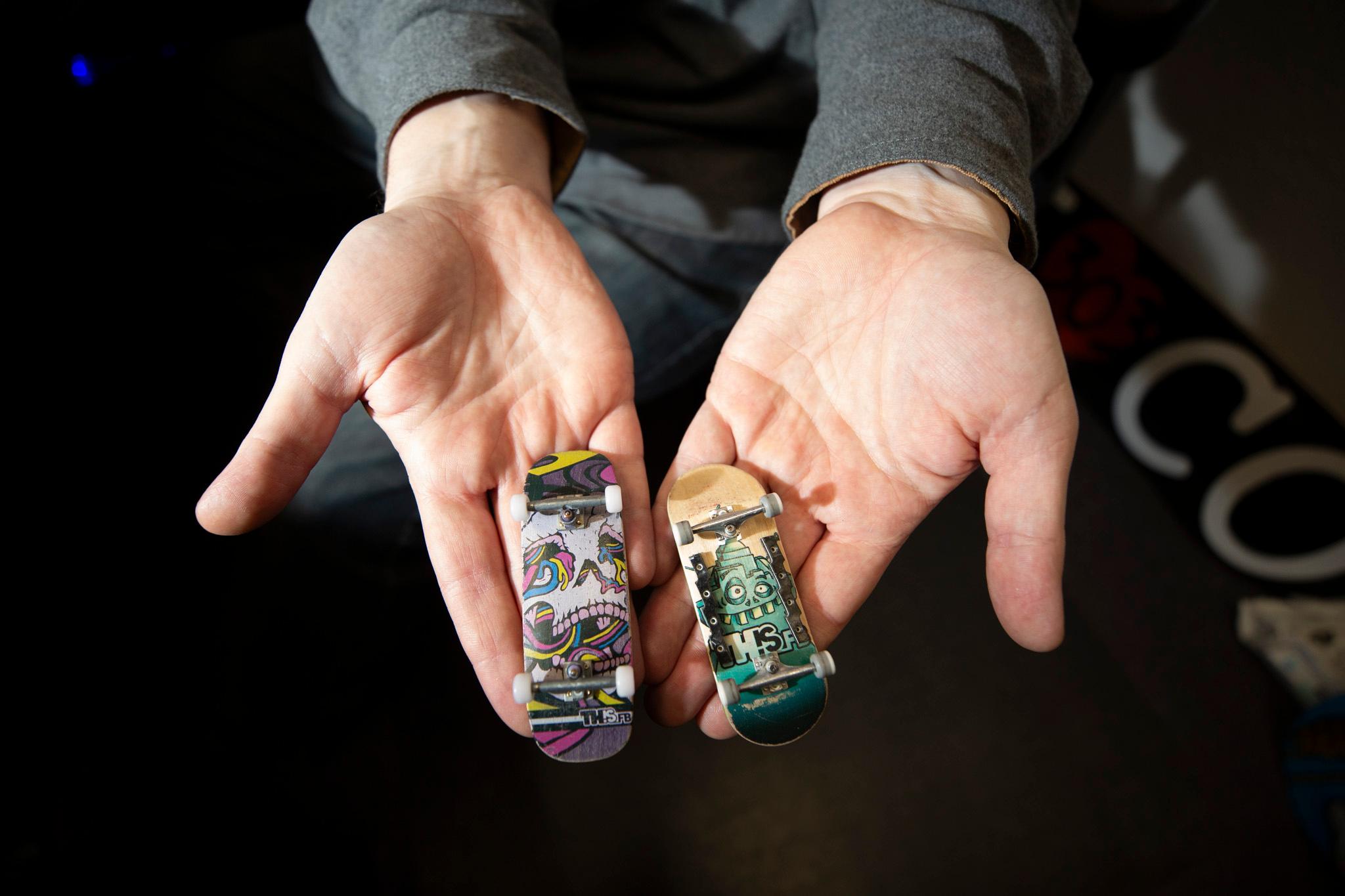
That moment, he said, gave him permission to go all-in on something he knew was worth his time. He had already opened his print shop, in its first location in Aurora, and knew immediately it would be a good venue for a similar event.
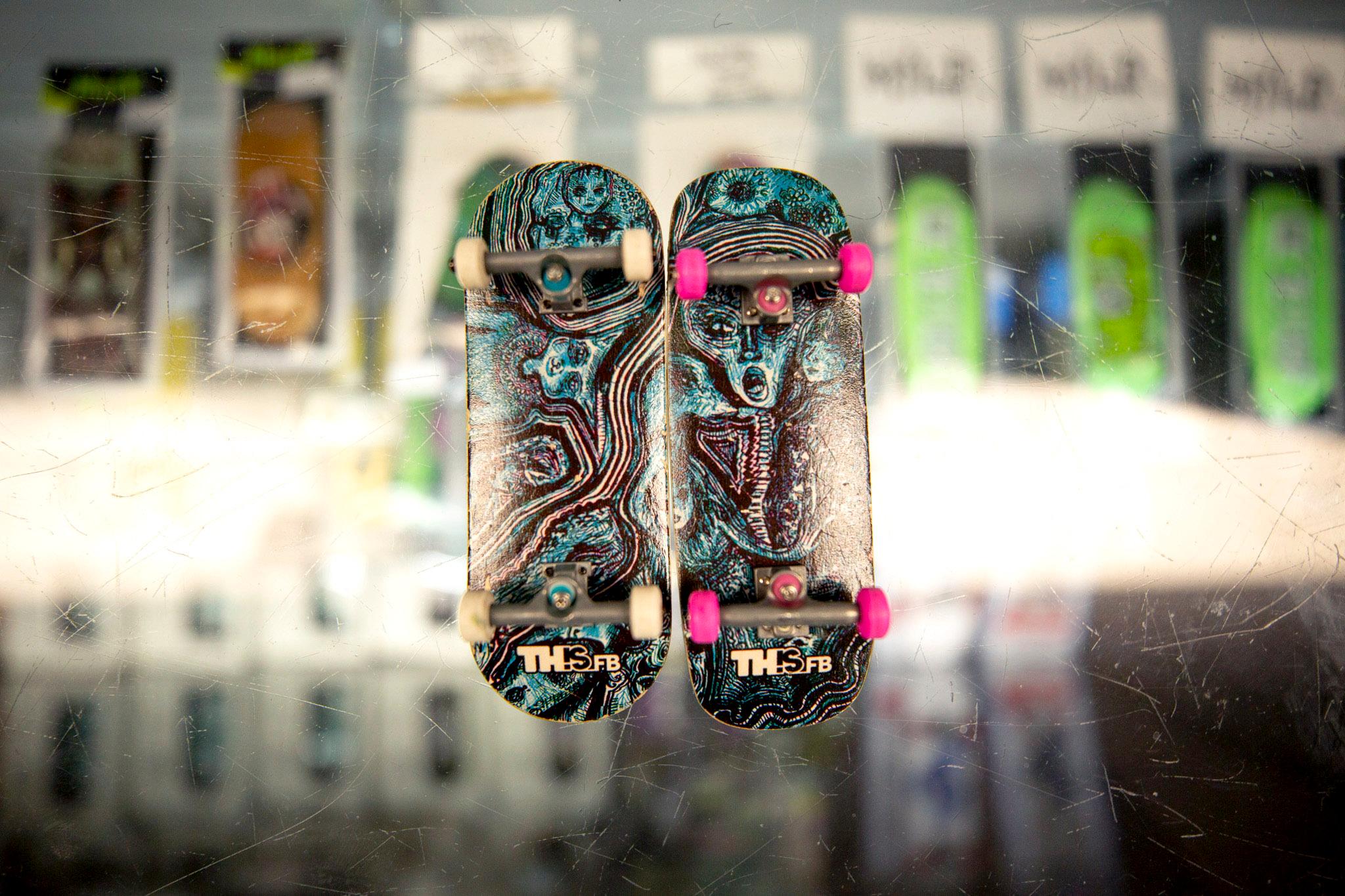
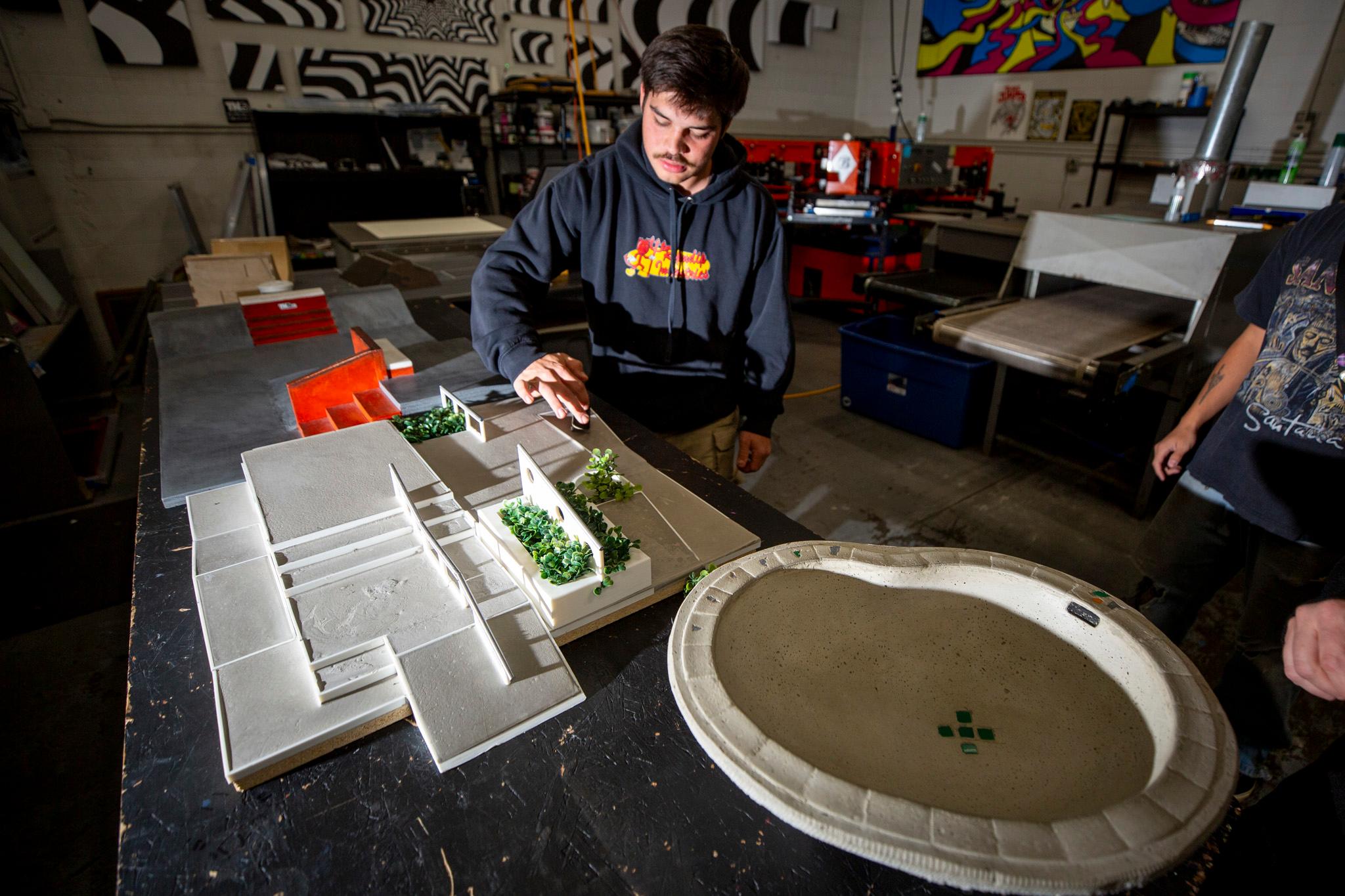
Sherrill’s first fingerboard meetup was a success, and kicked off a new era for Th!s Project. When Sherrill moved the company to Lakewood, he suddenly had more square footage for miniature skateparks and, crucially, retail space to sell little boards and wheels and trucks. Customers, he said, sought out the print shop’s growing side hustle. Th!s Project is one of just a few places in the country dedicated to the tiny sport.
“As quick as I could get stuff, it was gone. It was crazy. And people were coming here hanging out all day,” he remembered.
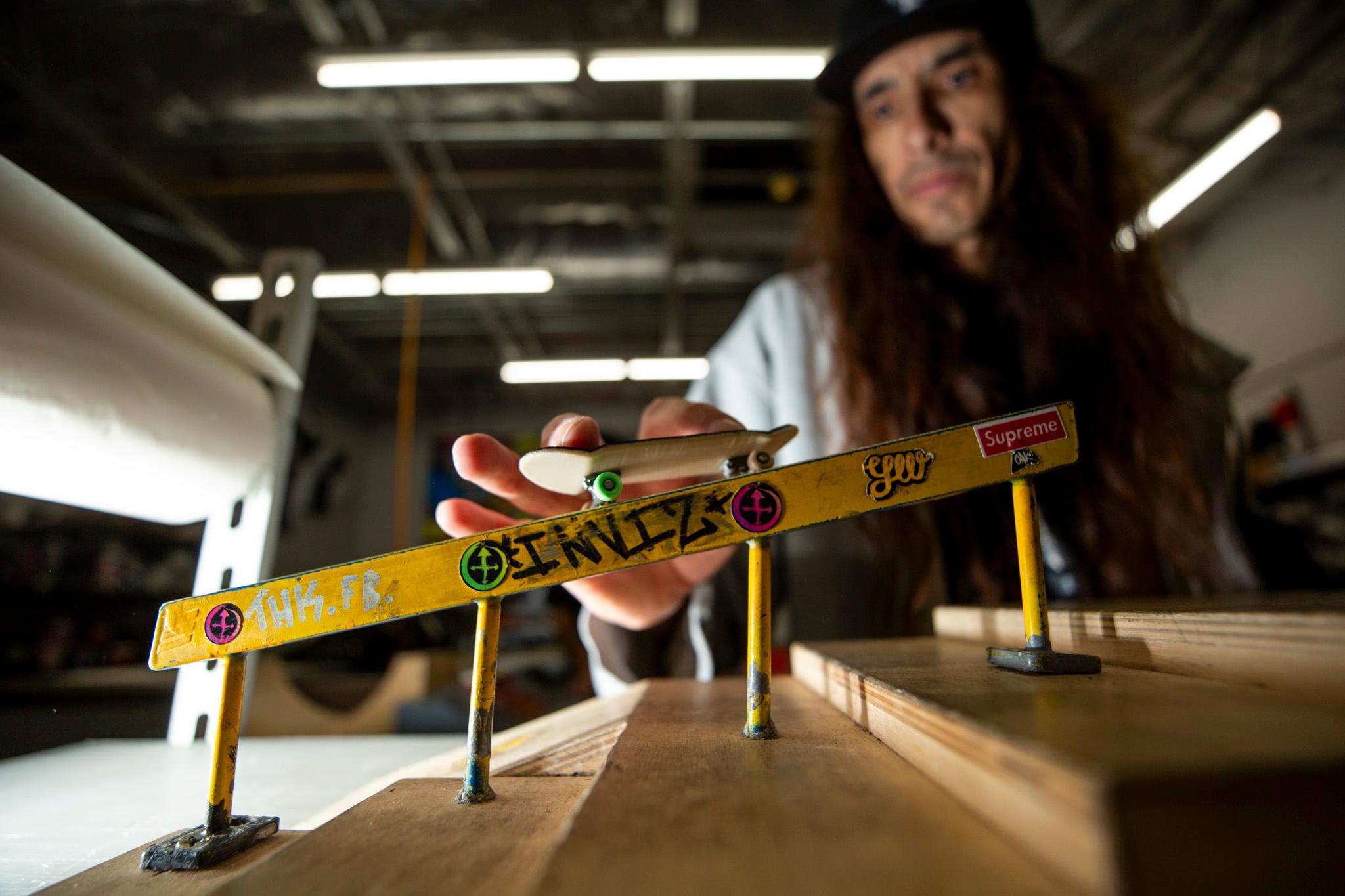
Denver metro skaters are part of a growing fingerboarding movement.
The pandemic, Sherrill said, breathed new life into this scene, as people stayed home and dove into niche interests to pass the time in isolation. They posted tricks online, he said, and recognition grew that a community for this was growing.
“People that are into it are now coming to terms with ‘this is cool.’ And they're getting better and they're coming to this fingerboard store and being OK with, ‘I'm going to pull this out at this show. I'm going to do this at this park or at this concert or at this restaurant.’ And then somebody for sure is going to be like, ‘Yo, you got a Tech Deck? I got one too,’” he said. “Now, there's enough people that come here that have a fingerboard hanging off their key chain or pull it out wherever.”
The broad appeal, he added, can be seen at his shop on First Fridays. People of all walks of life come to skate together.
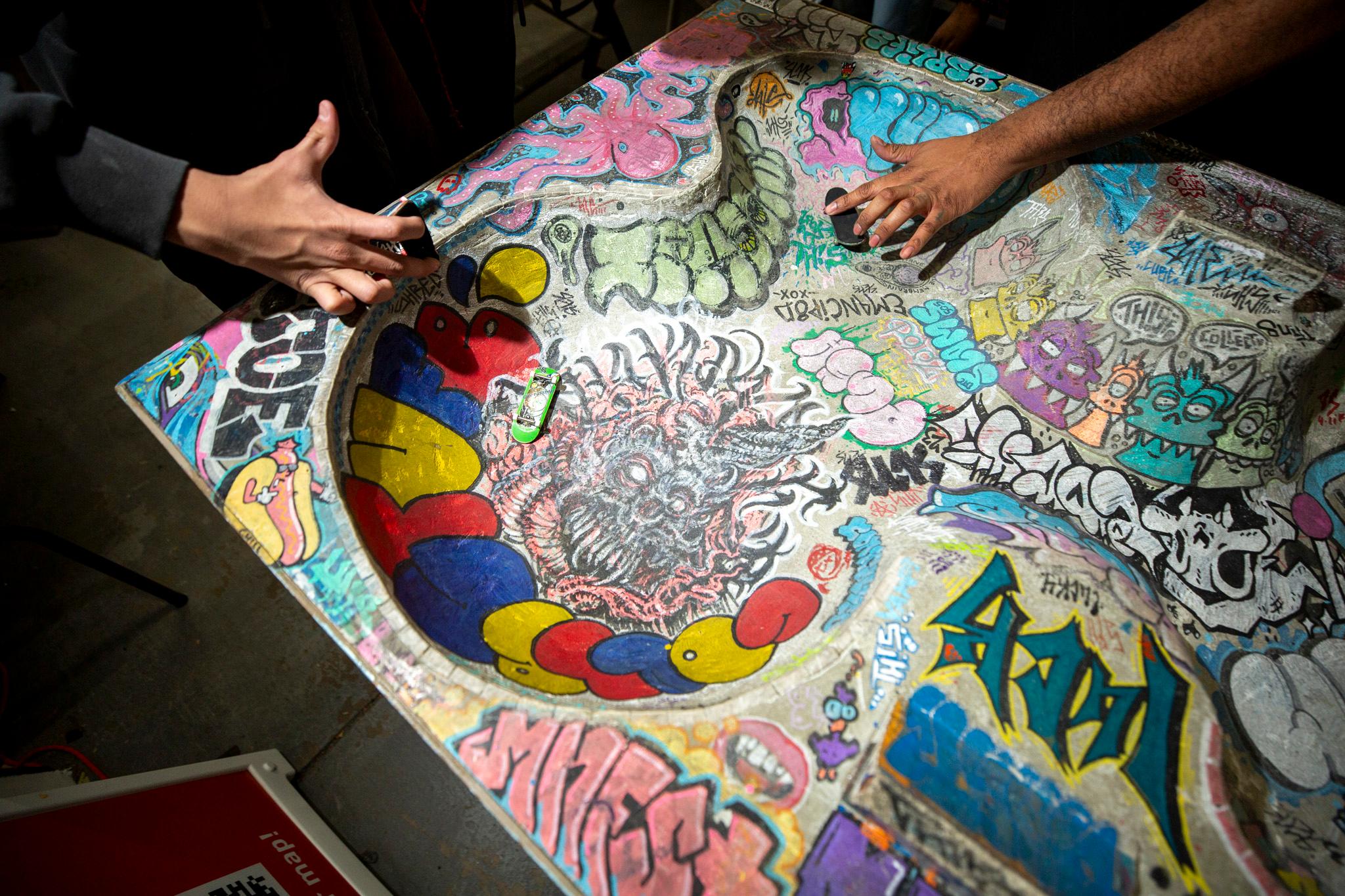
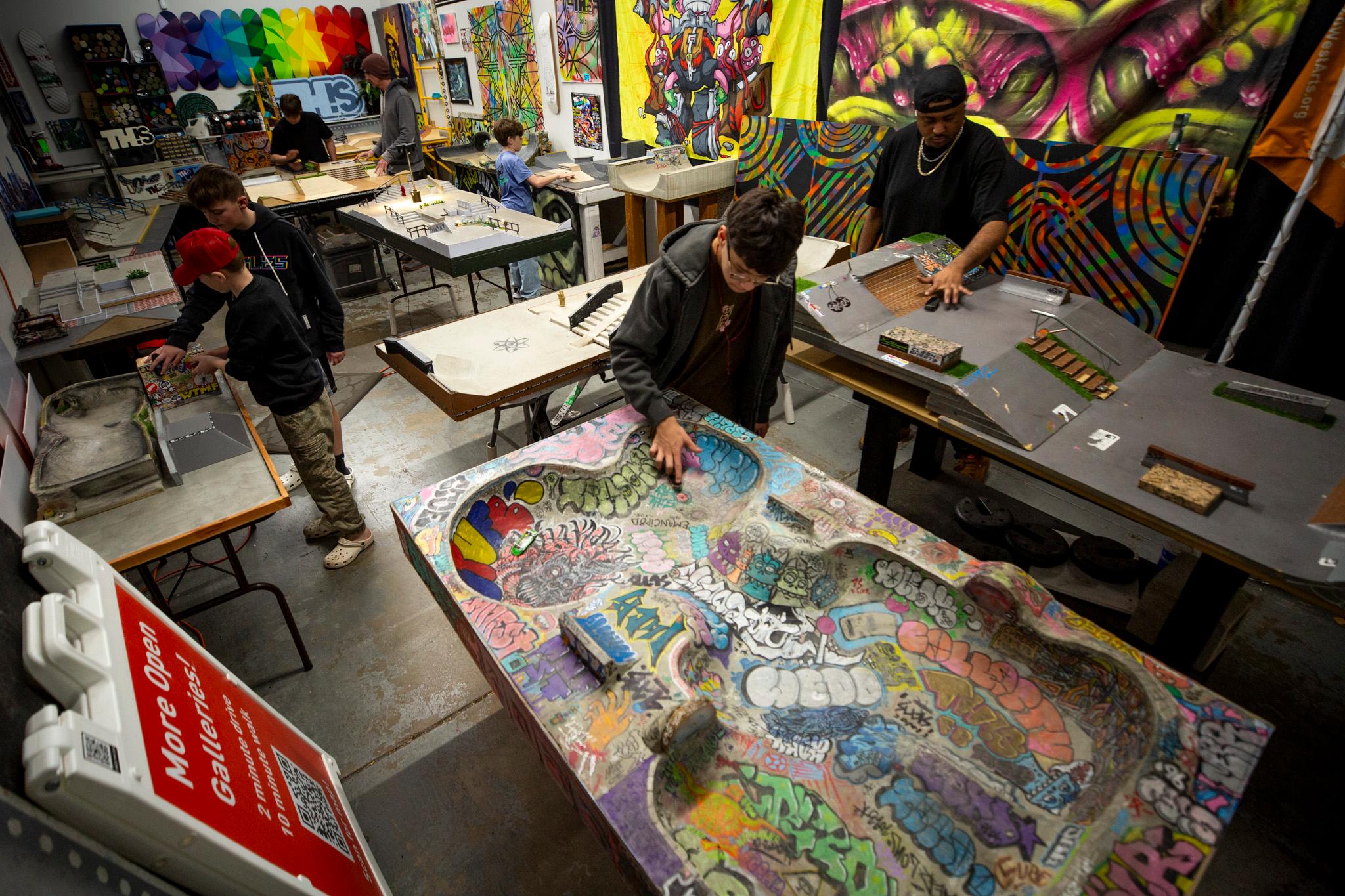
“I'm 42 years old. There's kids back there that are 10, and there's dudes back there that are older than me. And it's all types of different people. Whether or not you're a hardcore skateboarder or you like fidget toys, you played skateboard video games, dude, it's all types of people,” Sherril said. “It's super cool. People meet friends here.”
It was something David Ogaz, who is 20, appreciates about the spot. He and his friends regularly drive across the metro to hang out there, and spent over $100 on a recent Friday to purchase one of the painstakingly constructed miniatures on sale. They still like to ride full-size boards, but a trip to the miniature park can be just as fun.
“Most of the people that do this are just pretty cool. We all have the same interests,” he said. “You're kind just inside skating with the homies. It's kind of the same vibe. It's injury free, literally.”
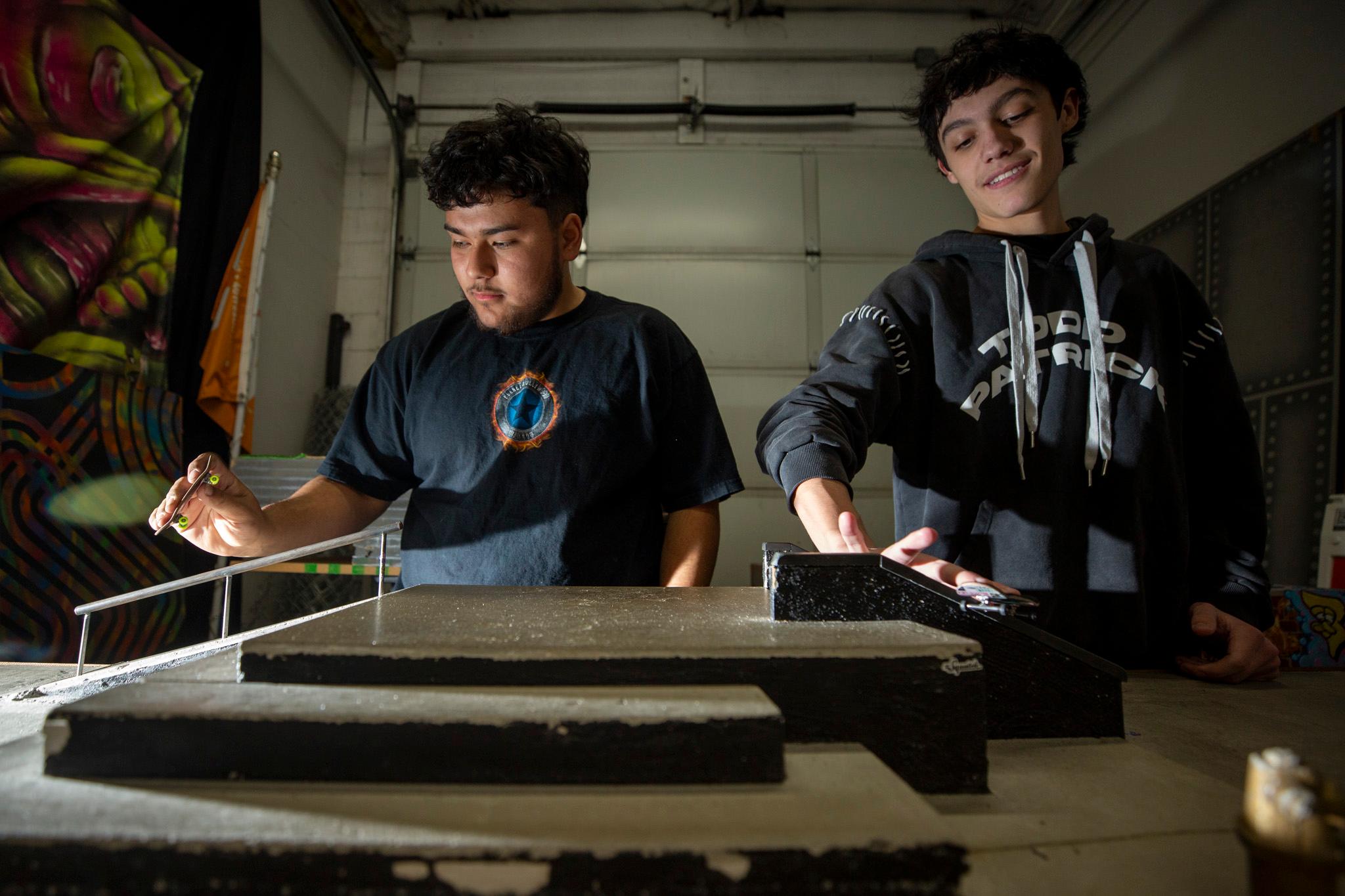
As more people flock to the sport, Sherril said he’s been in touch with people organizing professional-level events, like the U.S. Fingerboarding League, who are pushing this further into legitimacy. He said many professional full-size skaters are still skeptical about them — that is, until they try it out for themselves.
But the biggest sign of acceptance came in 2023, when the Denver Art Museum put on its “Desert Rider” show about “the connections between transportation, landscape, and identity in our nation’s Southwest desert region.”
The museum came to Sherrill to commission a miniature, rideable replica of a skate spot off Federal Boulevard, which now lives in his print shop. He said it was crazy to see this sport in such a venerable institution.
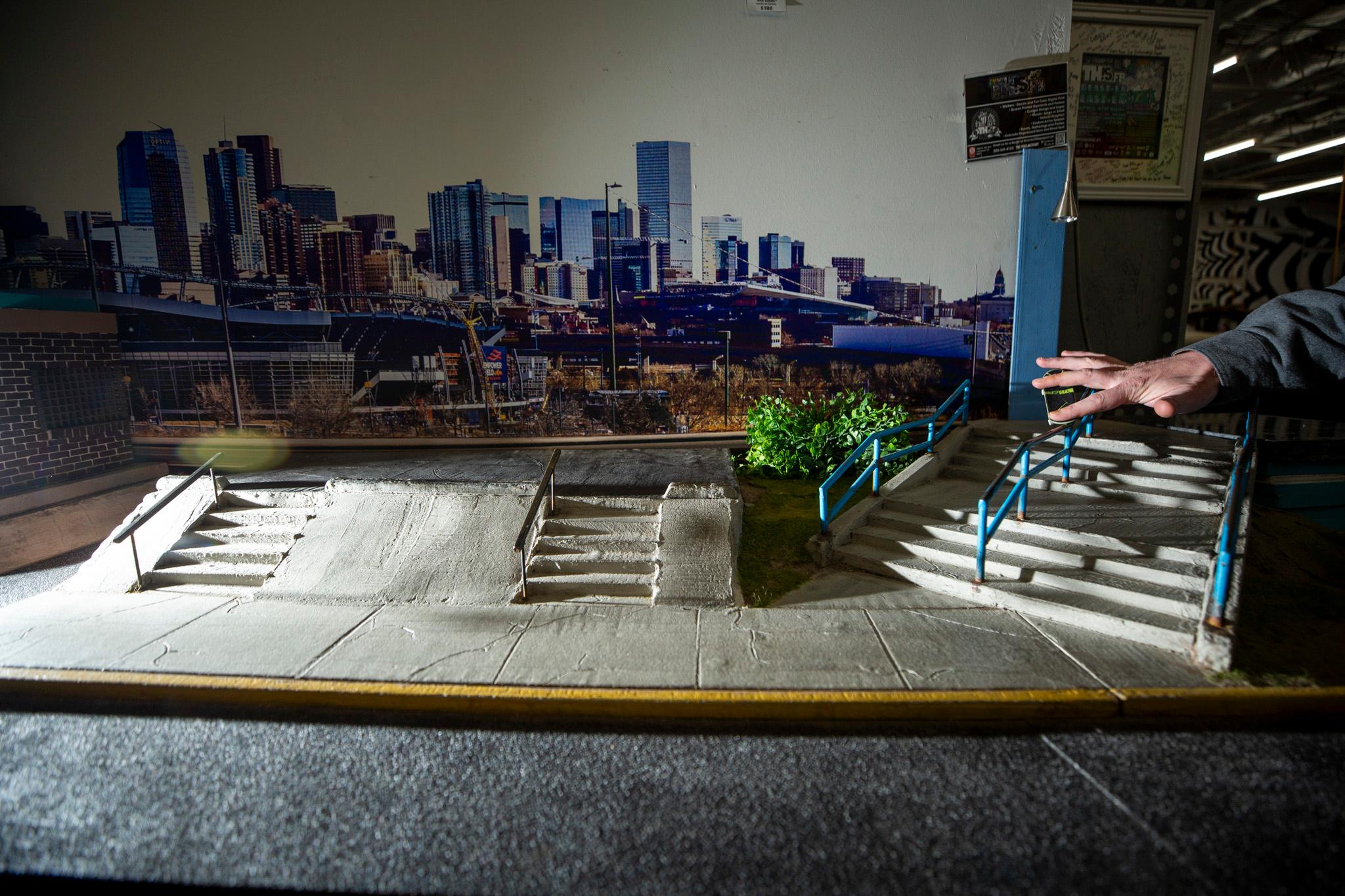
“We were there for opening night. They mentioned my name in front of the mayor,” he remembered. “Those fingerboard parks were the most popular part. Kids were in there, adults were in there, everybody's like, can you play with them?”
Yes, he said, they could. The glitzy venue was meaningful, but the best part was that it remained accessible to anyone willing to play.
Editor's note: This story has been updated to reflect that the skate and print shop is called TH!S Art, Print & Design and that Sherrill is currently the sole owner.