Areas from the south Denver metro to Fort Collins will be under a red flag warning for fire danger starting Tuesday.
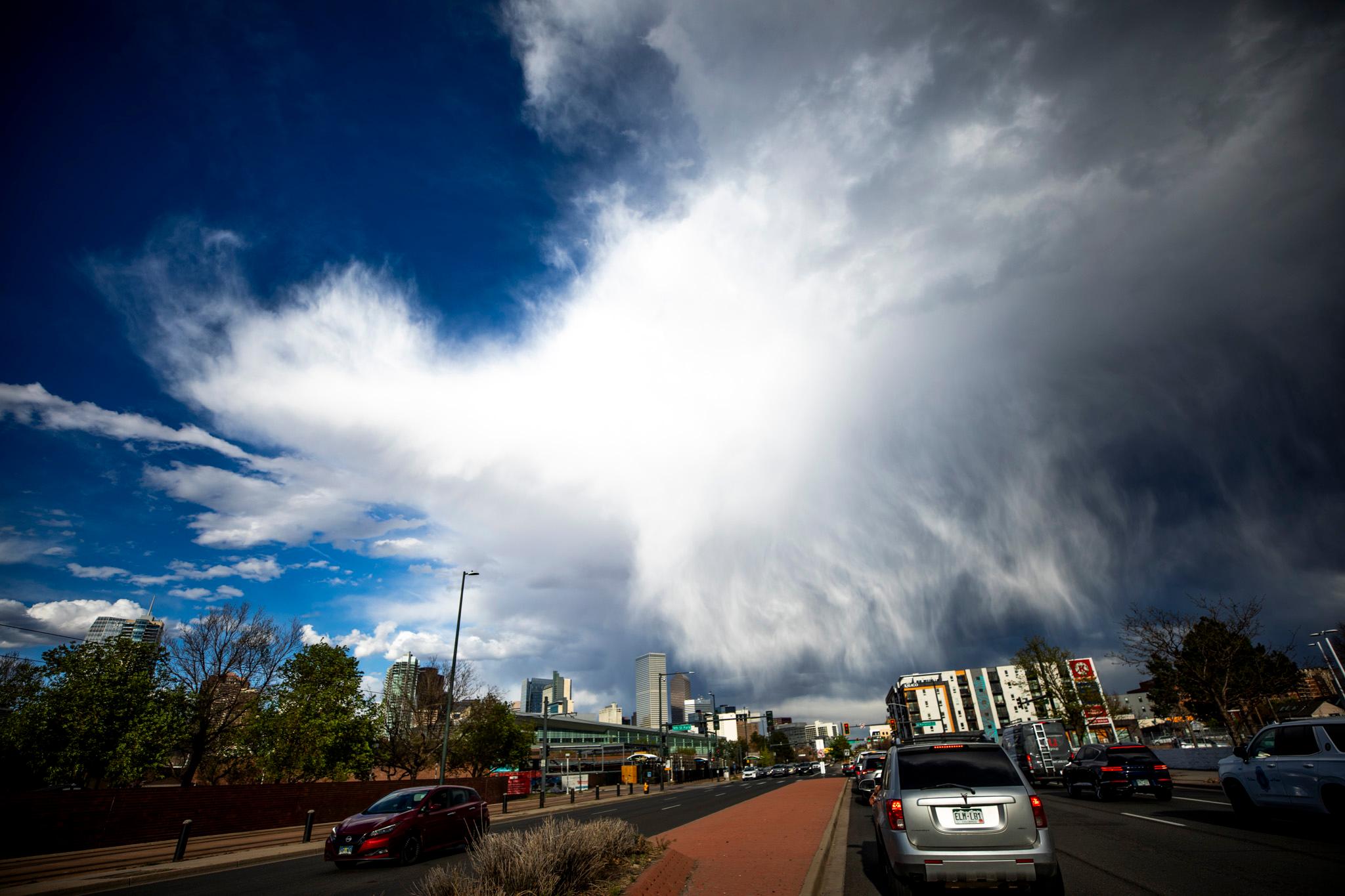
Temperatures in Denver could reach 70 degrees, with winds gusting up to 40 mph. At higher elevations, winds may reach 80 mph.
Fire can spread quickly in those conditions, especially with much of the Front Range in drought. Portions of Southern Colorado, including Colorado Springs and Pueblo, will also be under a red flag warning.
“We definitely do not want to start a fire these next few days,” said Russell Danielson, a National Weather Service meteorologist in Boulder.
As of Monday afternoon, Xcel Energy was not considering enacting emergency power shutoffs. The utility only considers public safety shutoffs when strong winds are combined with low relative humidity and dry ground conditions, it said in a statement.
Warm, breezy conditions could continue throughout the week around the Denver metro. Temperatures will be near record highs: The all-time recorded high for Tuesday was 71 degrees in 1995.
Snow and cold are expected to hit the mountains later Wednesday. That storm could bring six to 15 inches of snow to the Front Range mountains, with the highest amount hitting north of Rocky Mountain National Park. But Danielson said red flag warnings might continue through Wednesday in the metro area, depending on how soon the cold front arrives.
Snowpack levels across the state are at 44% of normal, and Denver Water’s reservoirs were at 82% compared to normal in early February, according to Denver Water.
How to prepare for a red flag day:
Front Range residents should ensure they’re signed up for emergency notifications in case there is a disaster and an evacuation is necessary, Danielson said.
Danielson said homeowners also should ensure, in the long term, that they have fire perimeters around their houses.
“Trees as far away from your house or a fence so a potential fire couldn't jump from a tree or fence right to your house,” Danielson said. “But those are oftentimes a much-longer timescale.”