By Zachary Shell
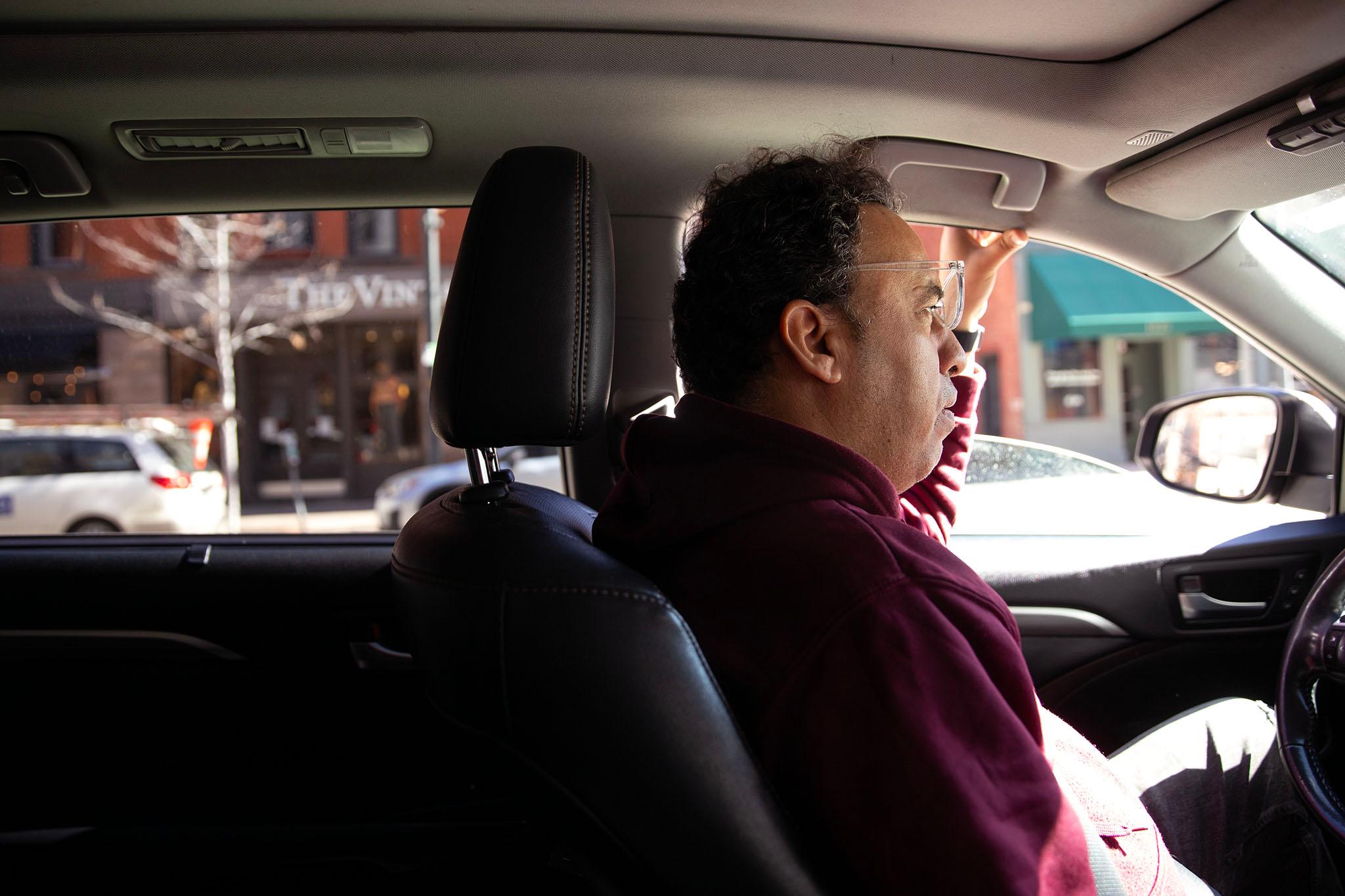
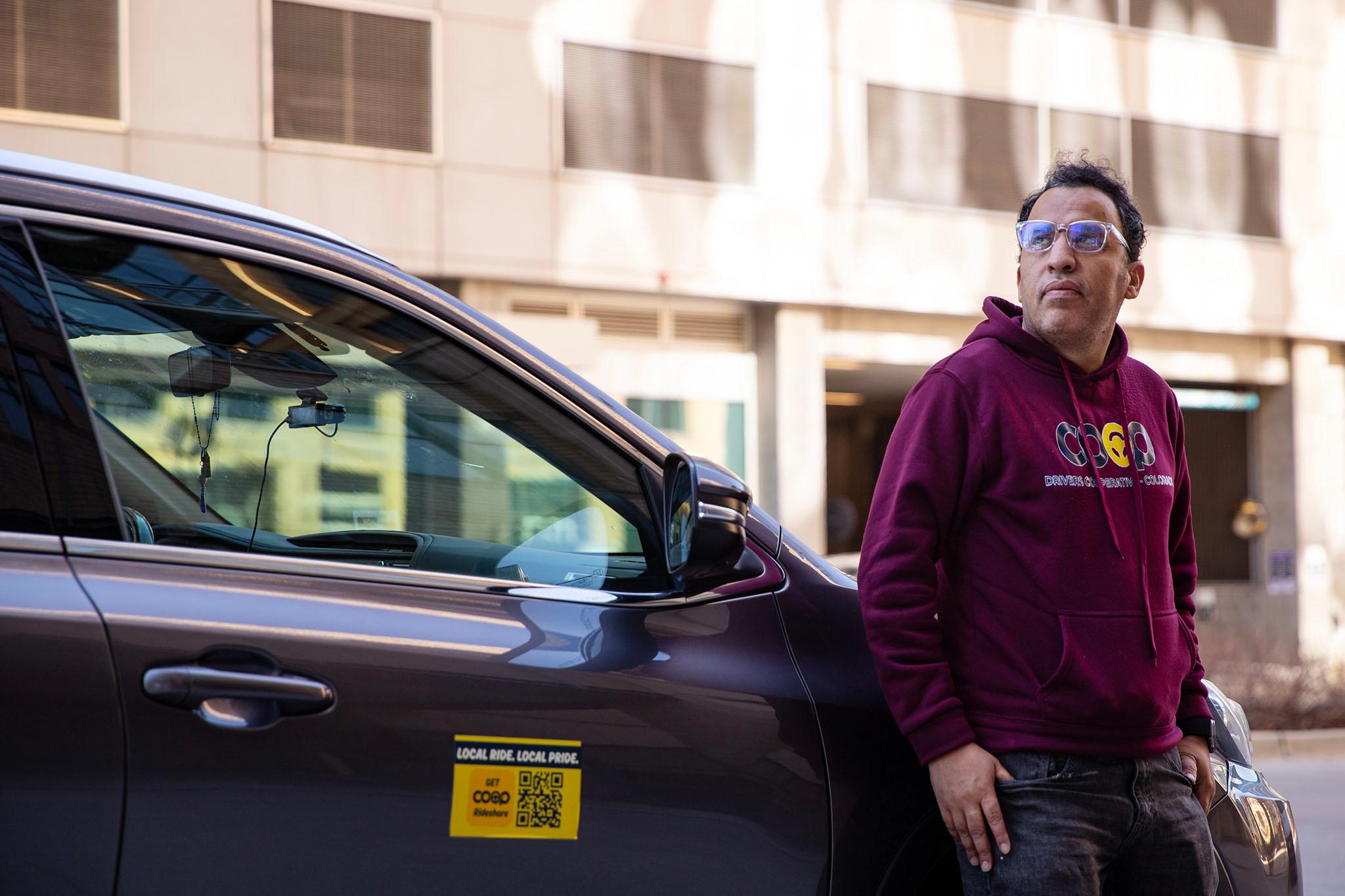
Ahmed Eloumrani was already a veteran of the ride-share industry. He’d given thousands of rides through Denver and knew the city’s streets like the back of his hand.
But on a Thursday in September 2024, parked outside Denver International Airport, he felt like a beginner again.
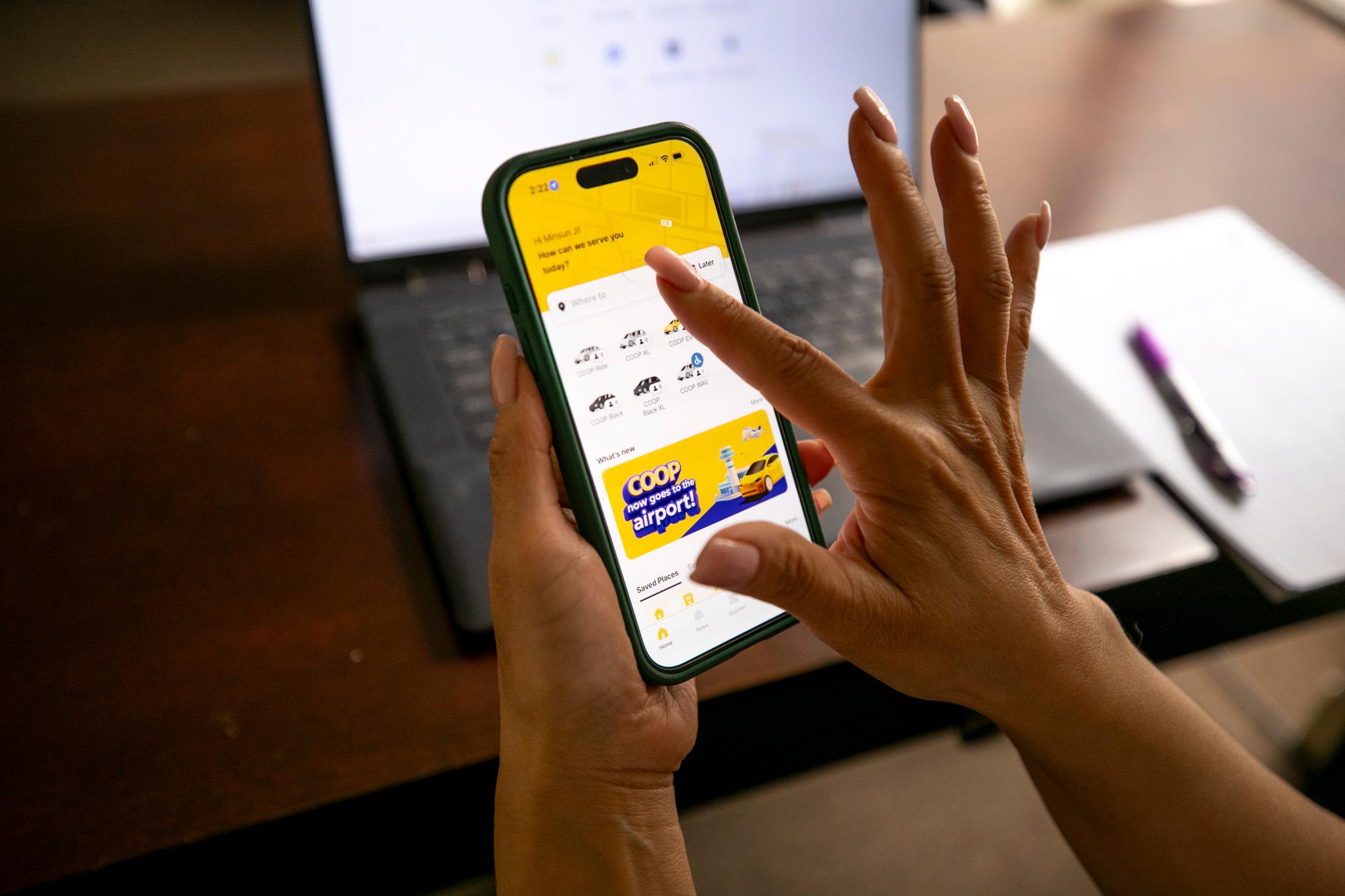
He pulled out his phone and opened an app. But it wasn’t Uber or Lyft — it was Drivers Cooperative, the ride-share co-op he helped to create.
And then he panicked.
“When I got my first ride,” he recalled recently, “I couldn't even control my emotion. I got lost. I know the city well — I don't even use GPS — but I was freaking out. I didn't know what to do.”
Eloumrani pulled himself together and completed the ride. After dropping off his passenger, he paused. Two years of organizing had led to this moment. The co-op was finally off the ground.
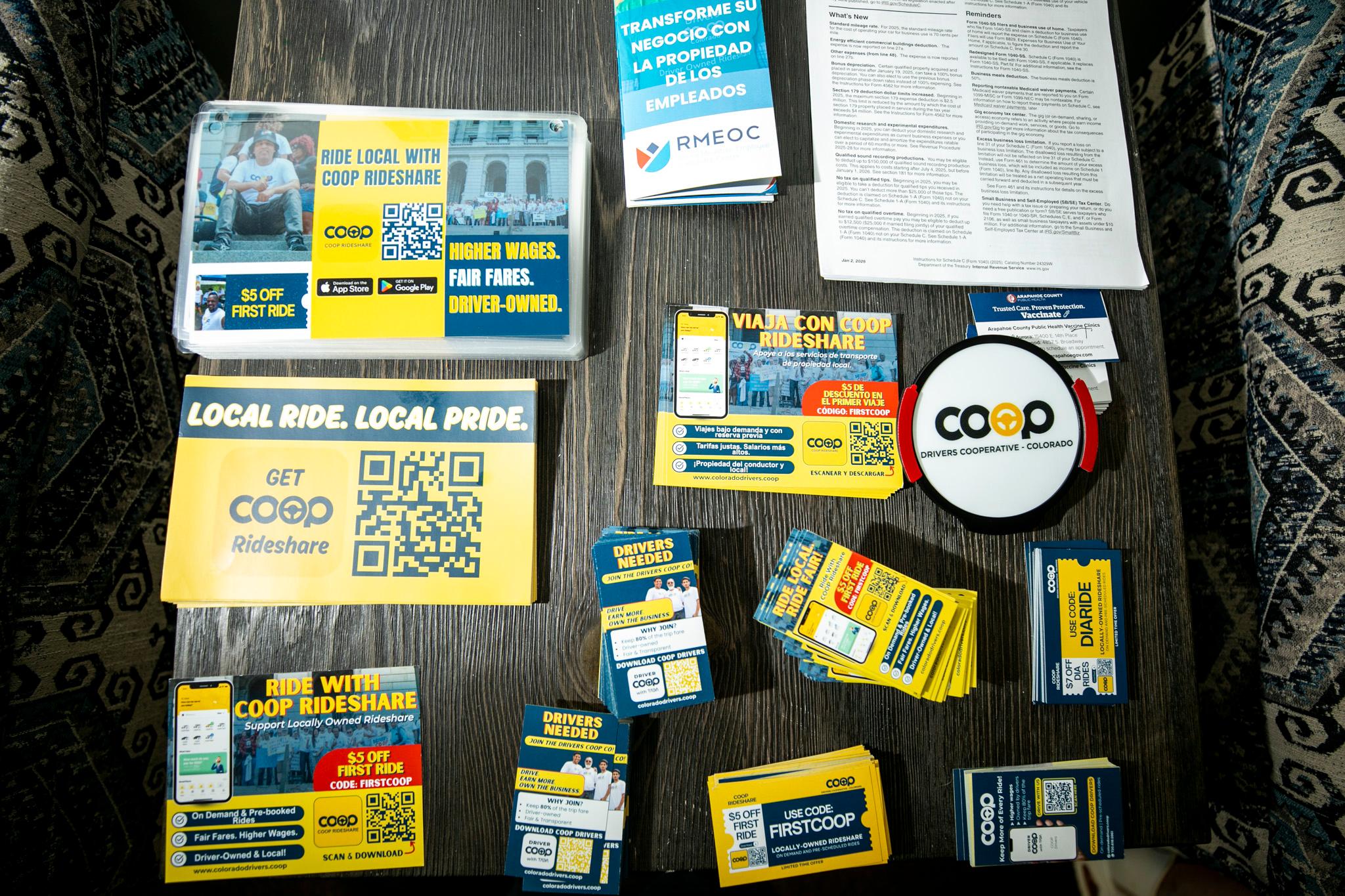
Today, Eloumrani is one of roughly 1,200 drivers who have signed on to Drivers Cooperative–Colorado. The co-op works just like Uber and Lyft, using an app to match riders with drivers for on-demand and scheduled trips. Unlike the tech giants, though, its platform is owned and operated by the drivers themselves.
The cooperative handles about 2,000 rides each month, with around 90 to 100 drivers logged on and available for service at any given time. Its app has been downloaded roughly 20,000 times by passengers across the state.
And yet, one big question remains: Can a grassroots operation like this become a meaningful part of Denver’s broader transportation system?
Challenging the system
After years of driving for traditional ride-share platforms, Eloumrani had grown frustrated with the instability of the job: fluctuating pay, shifting incentives, and little control over the conditions. The work was steady, but the terms never were.
Before he had even met Minsun Ji, he was ready for something different.
Minsun was a recent arrival from New York, where she’d helped build the kind of organization Eloumrani was looking for — The Drivers Cooperative, a ride-share service owned and run by its drivers. As the newly appointed executive director of the Rocky Mountain Employee Ownership Center, Minsun wondered whether a similar model could work in Denver.
To find out, she went straight to the source.
“We started going out to DIA,” Minsun said, “and immediately a lot of workers say, ‘Yes — yeah, we do need it.’”
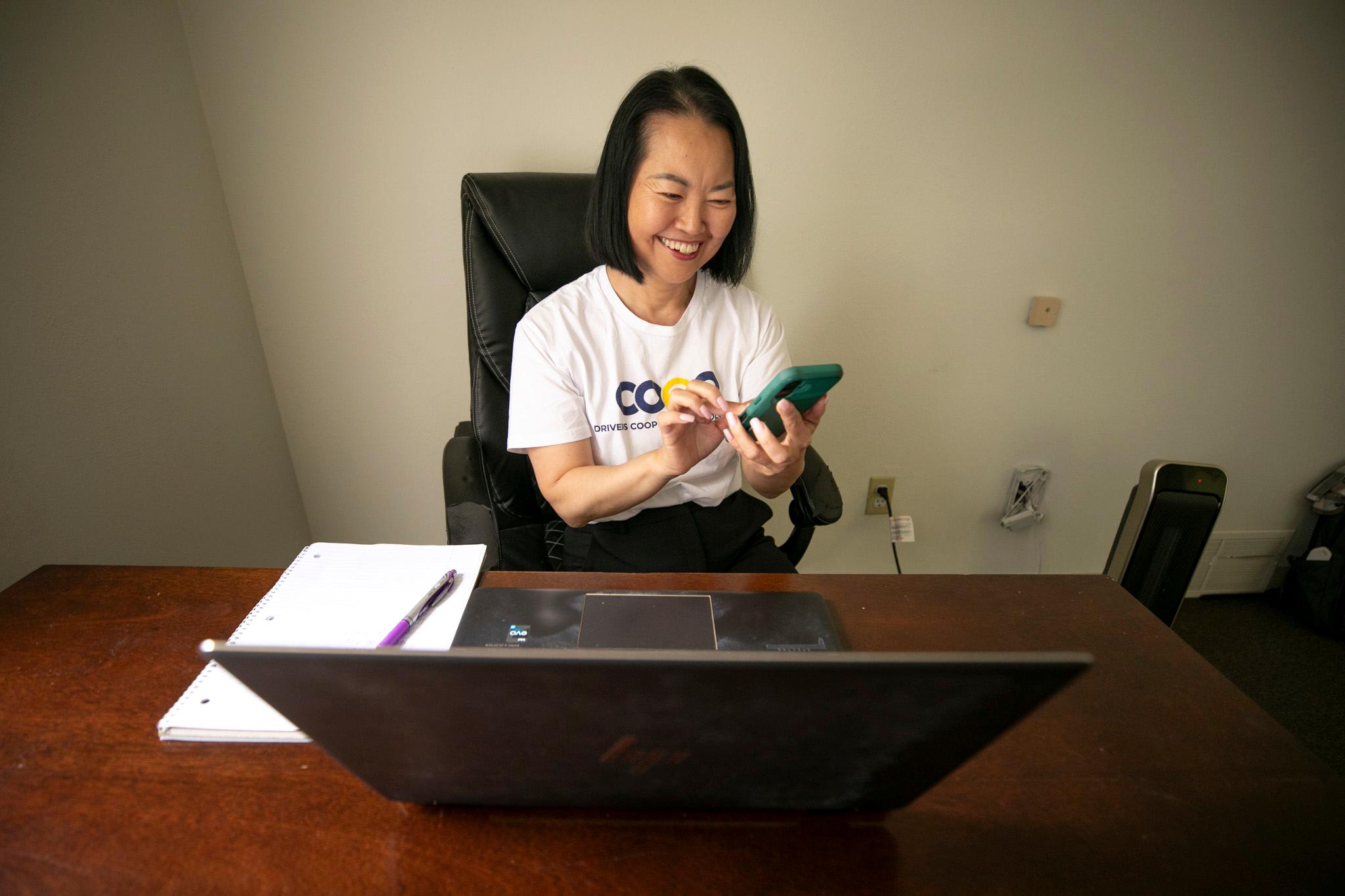
Within weeks, drivers were meeting regularly, and in May 2023, Drivers Cooperative–Colorado was born. By the time its first app launched in September 2024, the cooperative had grown to hundreds of participating drivers across the state.
Like Eloumrani, who moved here from Morocco, the majority of those drivers are immigrants — part of a workforce that has long powered ride-share services while working under terms set entirely by the companies.
On the major platforms, driver earnings often fall below $15 an hour — and in some cases under $10 — once expenses are factored in, according to recent studies. The cooperative model, on the other hand, allows drivers to keep 80% of each fare, while also giving them a voice in shaping the company.
“The money that you’re getting, you're getting a full share,” Eloumrani said. “You feel like you're working for your own business and you can grow it.”
The cooperative has also partnered with community groups like Empowering Communities Globally, a Denver nonprofit that supports refugees and immigrants with workforce and family services.
Deborah Young, the nonprofit’s executive director, said the cooperative provides service in ways typical ride-share apps don’t easily accommodate, such as coordinating pickups for larger groups. The co-op’s diverse workforce is also an asset, matching drivers with riders who share their language whenever possible.
“Women then don't have to be afraid when they get in,” Young said, “because they know that it's not going to be ICE, or somebody who doesn't like refugees or immigrants.”
But for the drivers themselves, the model is also about connection. “We have people from all over the world who are working in isolation,” Minsun said, “and we’re trying to create a sense of community and belonging.”
She added: “There are a lot of great leaders, like Ahmed, who really believe this kind of workplace gives them dignity that Uber or Lyft did not.”
Can it work?
While the co-op has attracted support, building a reliable service is an ongoing challenge.
On Reddit threads, riders describe a platform that is still struggling to reach critical mass. It can be hard to count on for spontaneous trips, with frustrations over cancellations, long wait times, and a scarcity of drivers — particularly in low-density areas.
“First attempt resulted in no drivers being found,” one user wrote. “A couple hours later, I tried it again. I was matched with a driver who was half an hour away, so canceled it.”
Still, riders say the app works more reliably when there’s no rush or when trips are scheduled in advance, including for airport pickups.
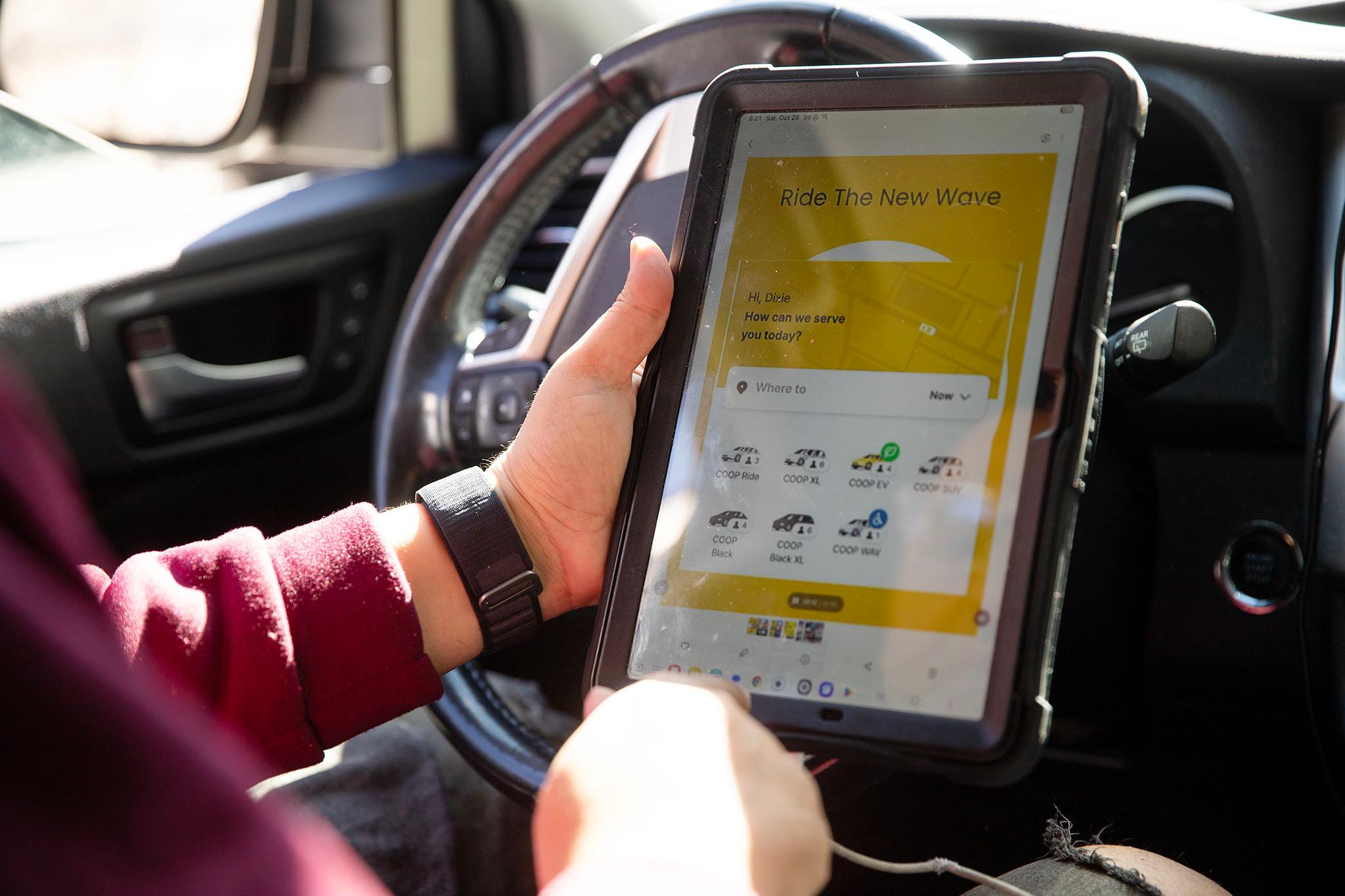
Needing a ride to DIA from Capitol Hill on a recent Saturday morning, I scheduled a pickup through the cooperative’s app at 9:30 p.m. the night before. Within 40 minutes, a driver had accepted the ride, although I only discovered this by checking the app. There was no other notification.
The following morning, the driver was right on time; once again, though, the only update on his status was a missed call from outside my house, along with an accompanying voicemail: “Driver. Outside. Wait for you.”
From there, everything went as expected. My driver, Salim — an immigrant from Afghanistan — was admirably chatty for 6:30 a.m. It was his first ride of the day, though he was confident he’d pick up another passenger for the return.
The completed fare cost me $54, compared with $67 for a similarly scheduled trip on Lyft — or more than $70 when requested on the spot.
Airport service like this is central to the cooperative’s success. For a driver like Eloumrani, who said he now drives primarily through the co-op, it’s a trip that typically pays him around $35 from downtown, more than double what he might have earned on other platforms.
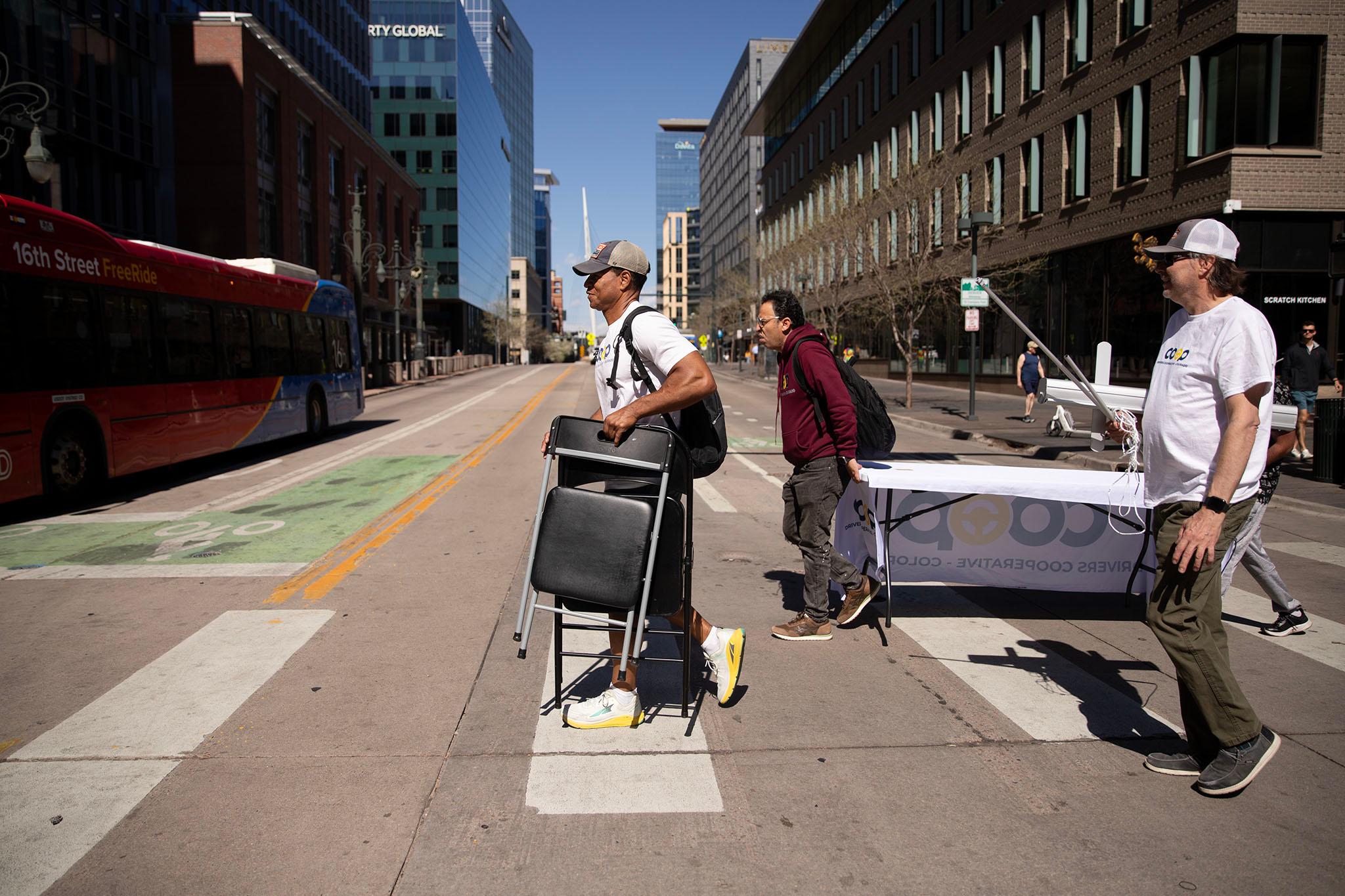
But the volume isn’t there yet. Eloumrani said he still isn’t getting as many rides as he would like — a frustration that extends beyond any one driver.
While the cooperative’s service is available statewide, most rides are concentrated in the Denver metro area, from Boulder to Colorado Springs, with far less demand elsewhere. That leaves dozens of drivers in places like Greeley waiting for riders that simply haven’t appeared.
“They have drivers, trust me, I’m one of them,” one driver wrote on Reddit. “Just not enough riders. I’m always online and never see rides. Sometimes a ride pops up, but it’s a supply and demand issue on both sides.”
A fundamental challenge
The cooperative’s main challenge is both fundamental and reinforcing: not enough drivers to accommodate every rider in a timely manner, not enough riders to incentivize new drivers, and not enough money to market to either group.
Darnell Newkirk, a driver who has been with the cooperative since its launch, mostly logs on during weekend evenings, when demand is highest. He picks up around seven or eight rides a night, but said there are often long stretches between requests.
Newkirk attributes the cooperative’s difficulty gaining traction to rider habits, suggesting that many customers stick with Uber or Lyft out of convenience rather than switching over. Though he used to drive full-time for the larger platforms, he said he now works other gigs during the week.
Could the cooperative be a full-time option? “Presently speaking, I would say no.”
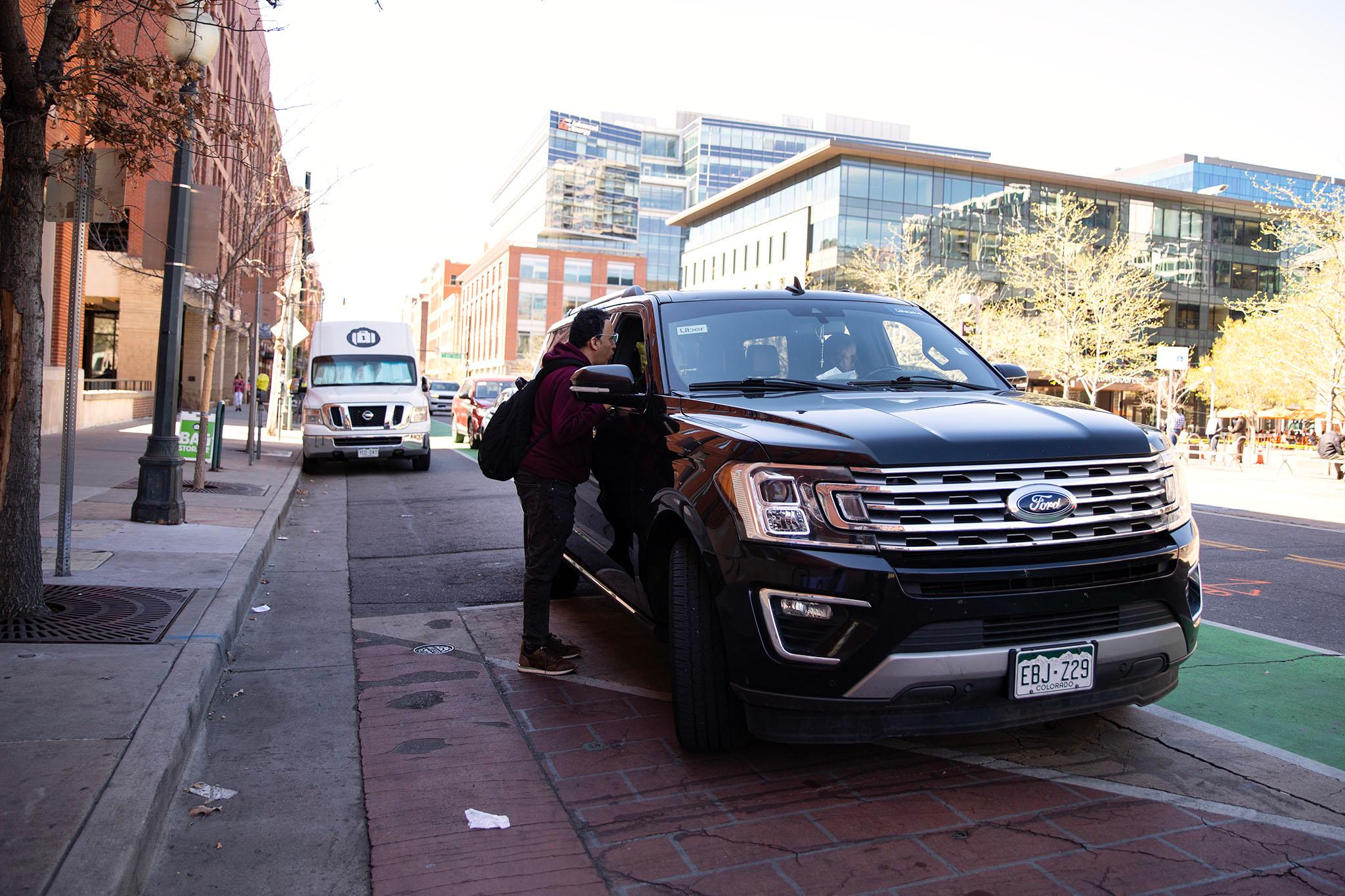
For now, drivers can earn more per ride, but not consistently enough to rely on it — a reality that will have to change if the cooperative wants to win a bigger share of a crowded ride-share market.
Unlike Uber and Lyft, which used billions in venture capital to scale quickly and gain market share, the cooperative operates without outside investment. Those larger companies not only handle most rides in the metro area, but they can also cut fares to attract passengers and maintain their dominance — shaping the terms of competition in ways smaller companies can’t match.
“What Uber has done is lower prices to kill us,” Minsun said. “We cannot always lower the price to the bottom.”
Hoping for public support
Unable to compete with the big guys on price alone, the cooperative is looking to secure a steadier stream of riders through contracts with public agencies — much like Uber and Lyft already do.
RTD currently partners with Uber and Lyft for on-demand connections when normal service doesn’t meet riders’ needs. The cooperative submitted a proposal for a similar contract last month, and Minsun expects to hear back by late April or May. Winning a public partnership, she said, could accelerate growth, allowing the cooperative to expand service for low-income seniors and people with disabilities.
“We do need more support from the government,” she said. “I’d love to see more support from leaders who could be proud to say this is happening here.”
Even as that decision looms, Minsun hopes riders will choose the local option and think beyond cost. “I hope they don't only look at the price — of course, you know, the cheaper the better — but think about what your one more dollar means for the entire community.”
‘I started crying’
A year and a half after his first ride, Eloumrani echoed Minsun’s appeal. “I'm asking Colorado to support our local ride-share,” he said, stressing that the service offers a way to preserve the human side of an industry increasingly shaped by technology.
He credits his unwavering belief in the project to that moment outside DIA, when he realized he was part of something bigger than himself.
“I started crying,” he recalled, “because I did it. I did it not because of me, but thanks to the others, the founders, all the people.”
He now sees the cooperative as his way of building something for future drivers, helping them the way Minsun and others helped him.
“The co-op is like a family, you know what I mean?” he said. “In the end, I'm going to go. I'm going to leave. And what you're going to leave behind is what you've done. What you've done is something like this.”