Updated at 2:35 p.m. on Tuesday, May 13, 2026
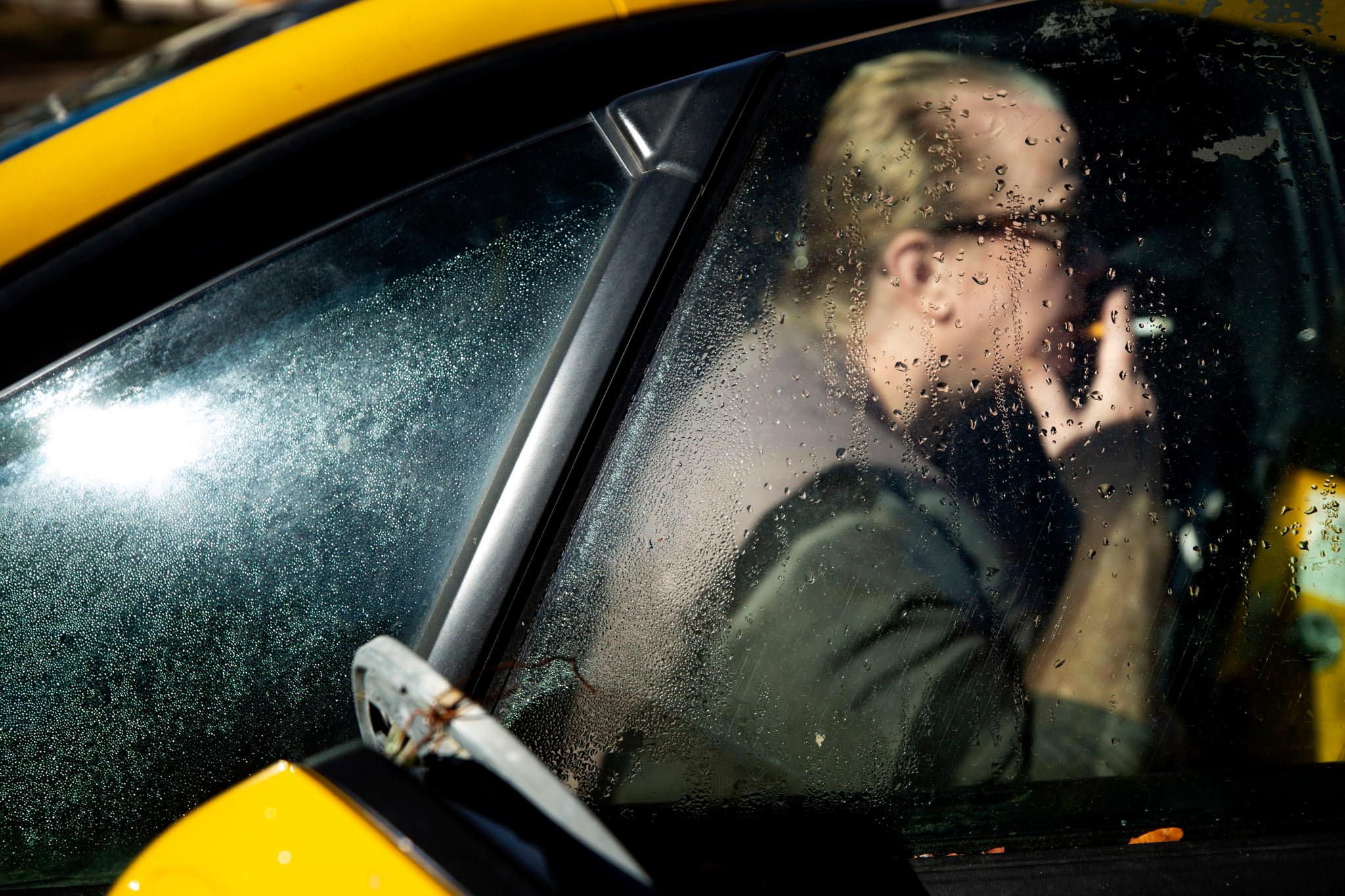
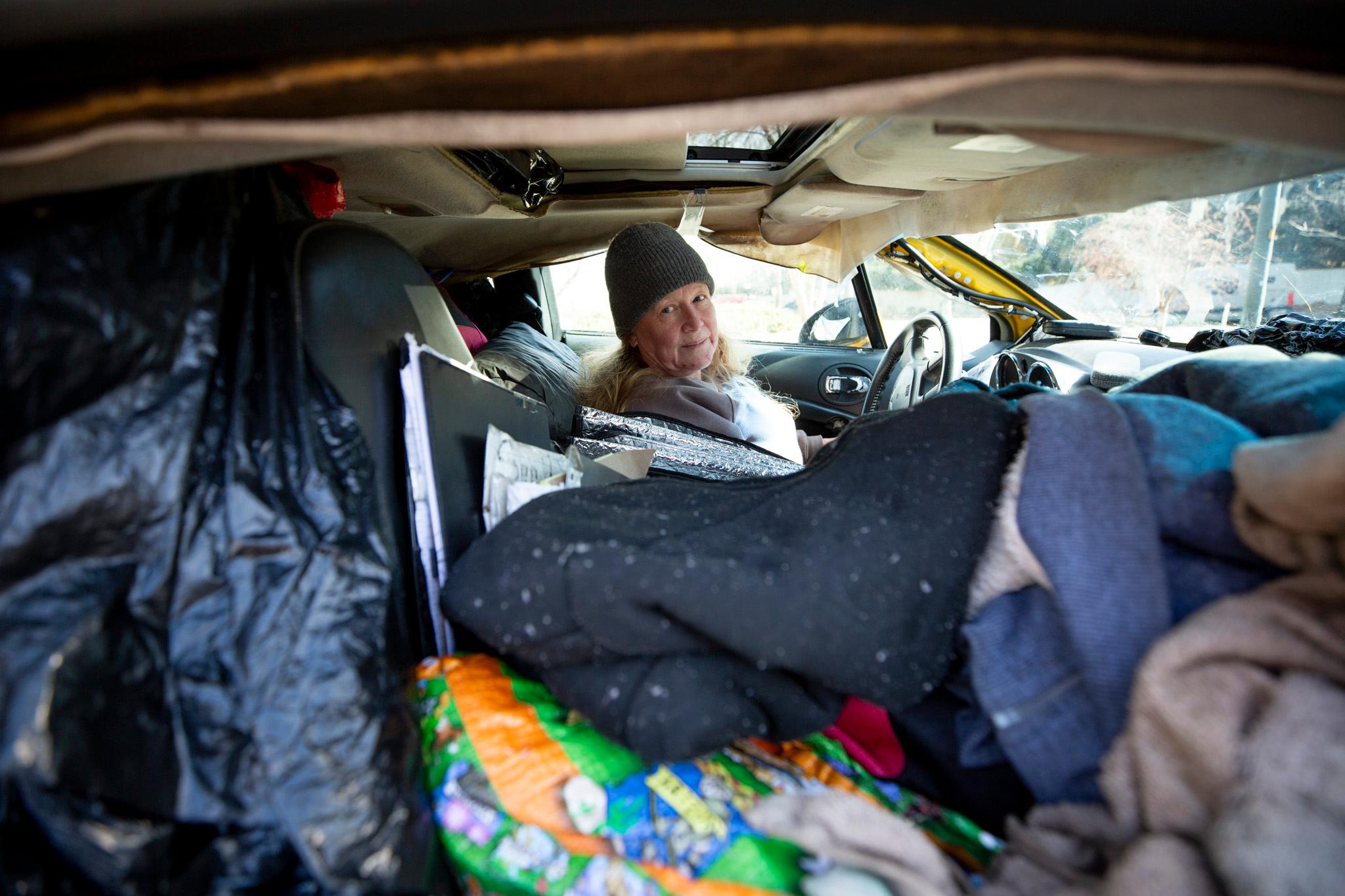
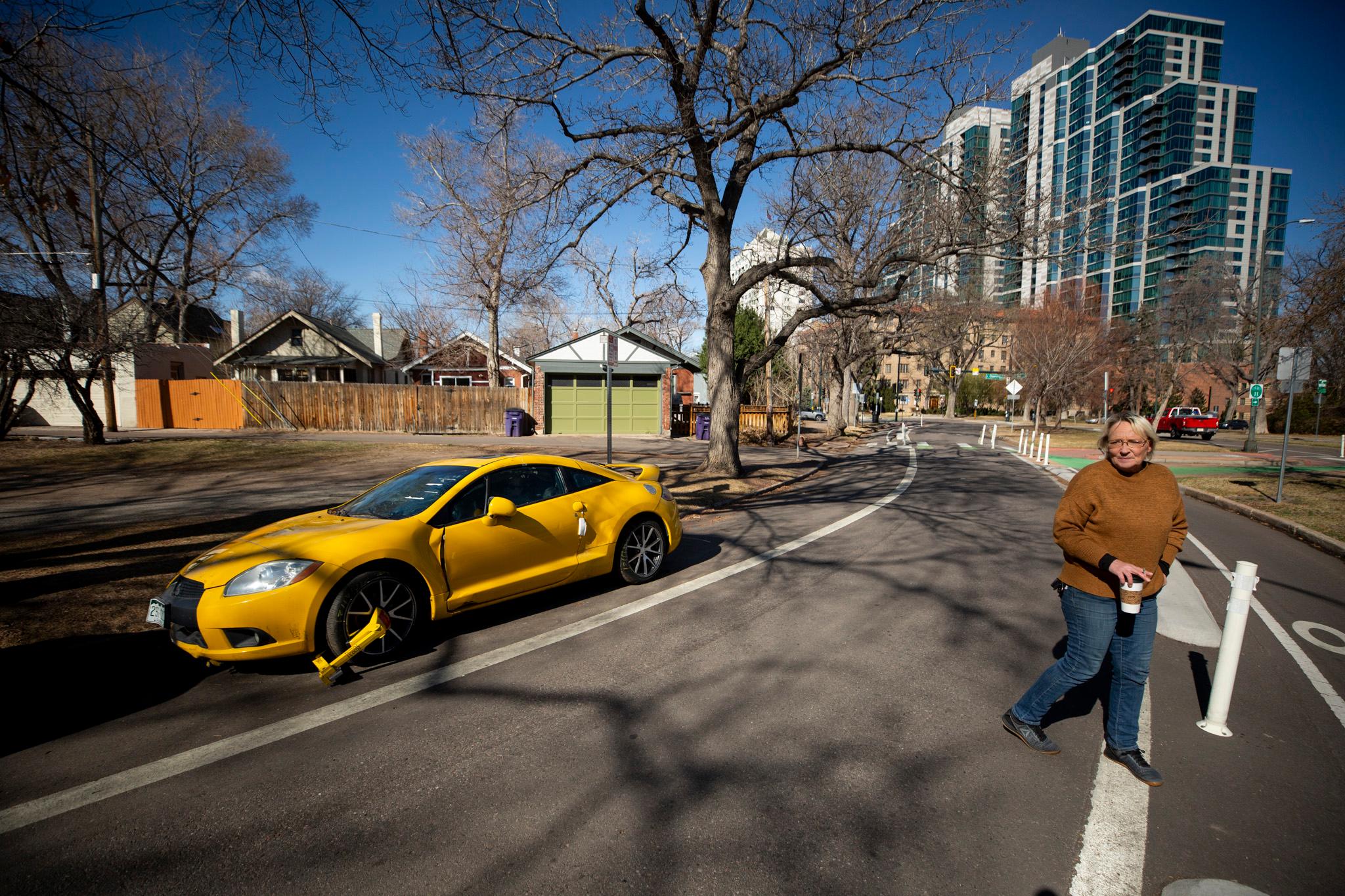
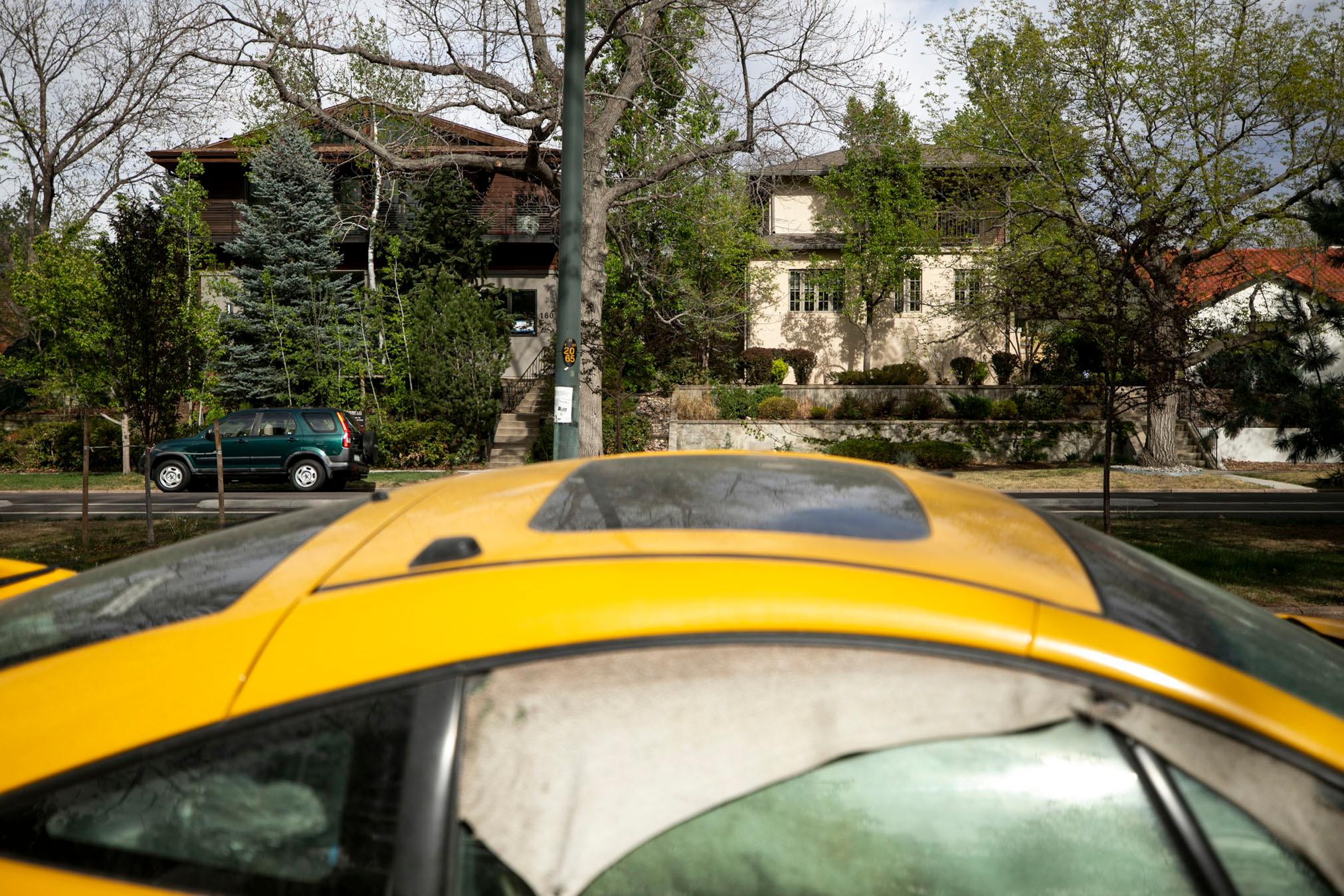
On a cold March morning, Suzanne Elaine McKinney, a 63-year-old attorney, hid behind trash bags and space-blanket curtains — crammed in the driver’s seat of her home, a coffin-tight Mitsubishi Eclipse. The aging yellow sports car was decorated with frayed bumper stickers — Wax Trax, Tattered Cover and “Wild Women Don’t Get the Blues.”
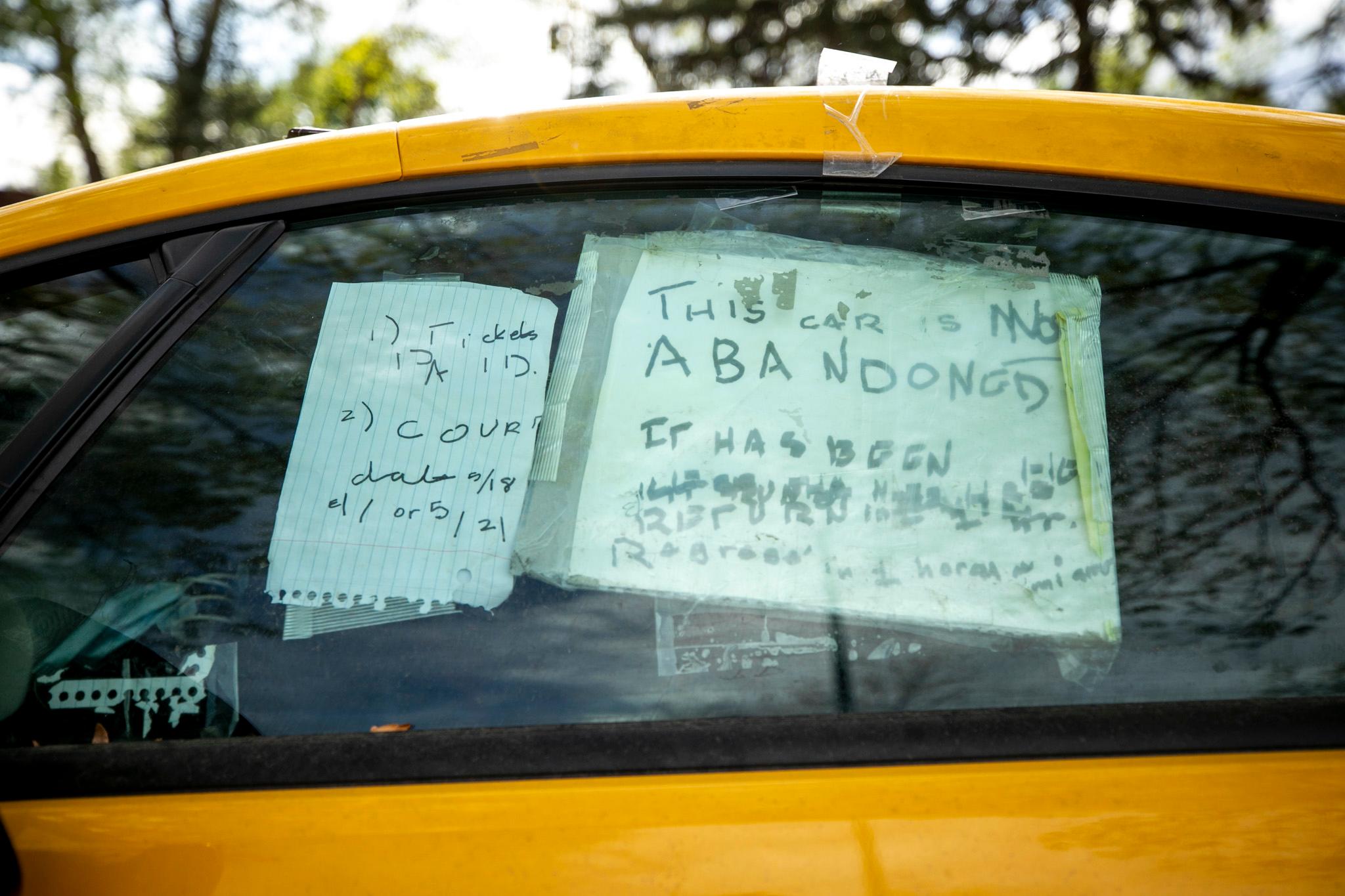
There was also a note scrawled on college-ruled notebook paper: Please do not tow.
Two dozen feet away, Washington Park neighbors huddled together to discuss McKinney and her car. Not wanting McKinney to hear them, they spoke in hushed voices about how to force her to move from their neighborhood. They wanted her off the private patch of concrete she was borrowing behind her friend Terry Berkeley’s house.
Where to? Maybe back to Marion Parkway, where McKinney had spent the past decade in her car. Or a Denver hotel homeless shelter. Or her old Quaker meeting house.
Anywhere but here.
Chatter about McKinney had been rattling around the neighborhood, on social media and through city hall over the past few weeks, crescendoing as winter turned to spring.
The questions confounded the neighborhood: How do you help people experiencing homelessness who do not want what you have to offer? And under what conditions, if any, should people who pose no immediate threat be stripped of their independence and forced into services?
Denver police had been threatening to impound McKinney’s Eclipse since February, cheered on by a group of locals sick of seeing the junker and smelling her cigarettes. Officers hoped that threatening to take her car could force her to choose shelter.
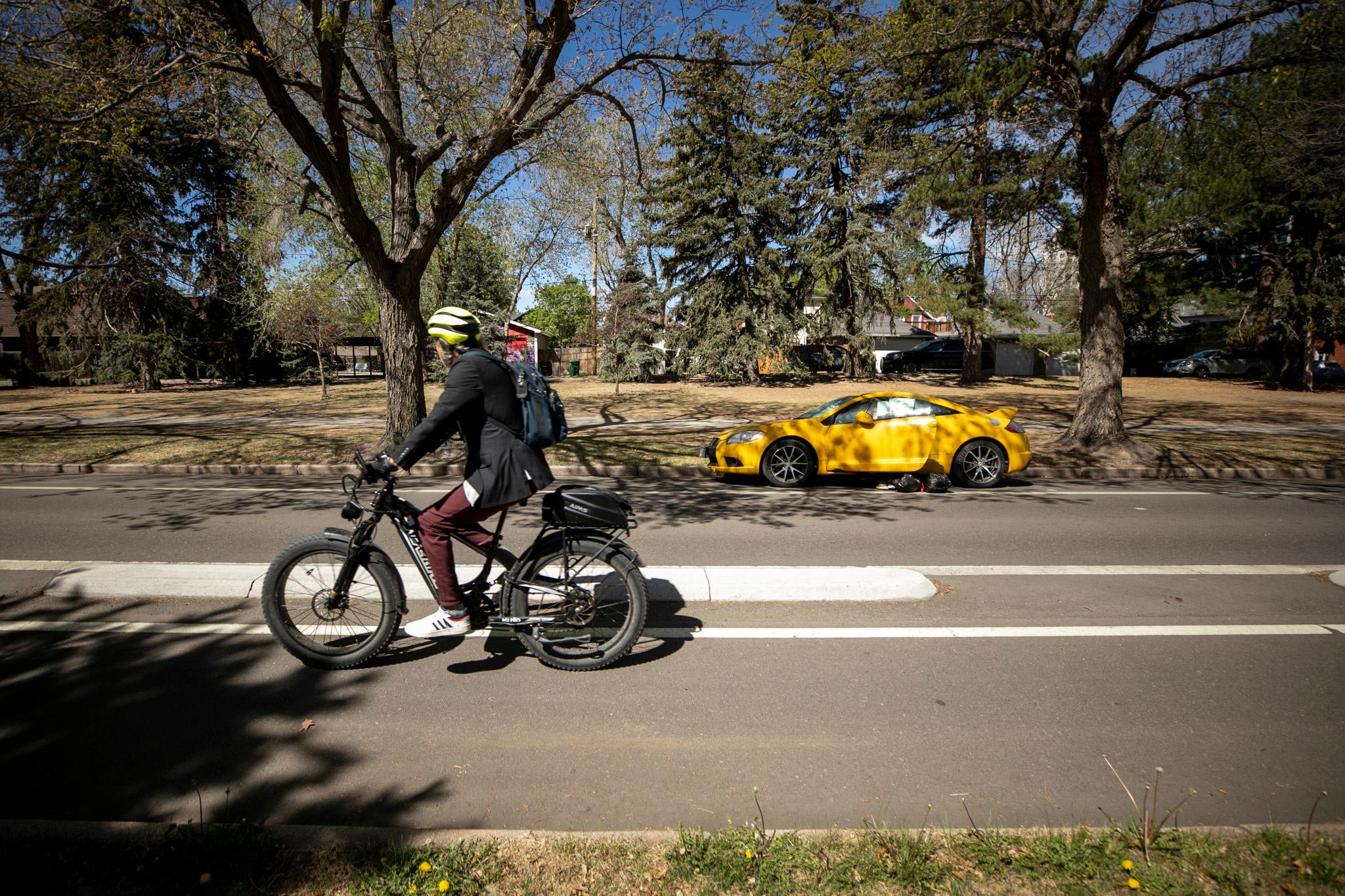
“Her car should be legal to be on a city street,” said Ryan Dillon, who was eager for McKinney to be off of his neighbor Berkeley’s property. “If it's not, it should be towed. Just flat out. Whether somebody lives in it or not.”
“This car is street legal,” she said in an interview. “It’s just not insurable.”
Berkeley also wanted McKinney to move on to a permanent shelter. But she was furious that her neighbors would force her to evict one of her closest friends from the parking spot behind her home.
“They don't want to look at poor people,” Berkeley said. “They don't want to see someone living in their car. It offends their sensibilities.”
Erin Sturga, who befriended McKinney several years back, launched a GoFundMe a few weeks ago to help her friend buy a used car. Longtime neighbors donated thousands, and counting, to support the woman they had seen for so long.
Community advocate Amy Beck, who had first met McKinney years ago, was also in the alley, trying to prevent her old friend from losing her car. She was calling city council members, Denver police and the city’s Department of Housing Stability, trying to get everybody’s eyes on McKinney.
If she were to lose the Eclipse, McKinney would have to choose between braving a homeless shelter or surviving single-digit nights outside. Both would be terrifying firsts for her. Blinded by cataracts, she said, she couldn't see who was safe and who was dangerous.
As the neighbors chattered about how to move her without destroying her life, McKinney girded herself to talk by ingesting her breakfast of champions: American Spirit cigarettes and cans of Starbucks’ DoubleShot Iced Coffee.
She knew she had run out of choices. Police, neighbors, advocates and city hall were all forcing her hand.
What was next? She could not see.
In a city ending homelessness
Visible homelessness has troubled voters and befuddled Denver politicians since the city’s founding. Mayors have been promising to end homelessness, cycling through a familiar rotation of fixes: shelters, housing, addiction treatment, mental health care and punishment, again and again, with little change.
The current mayor, Mike Johnston, promised to end street homelessness in his first term. The city has spent hundreds of millions of taxpayer dollars on homelessness solutions, bringing more than 8,000 people indoors from the streets and placing more than 5,300 people in stable housing, since Johnston took office. (Still, overall homelessness has grown, according to the most recent federal data.)
Among the tens of thousands who use metro homelessness services, the vast majority want to come inside and are quick to accept shelter, said Cole Chandler, a housing and homelessness official since Johnston took office in 2023.
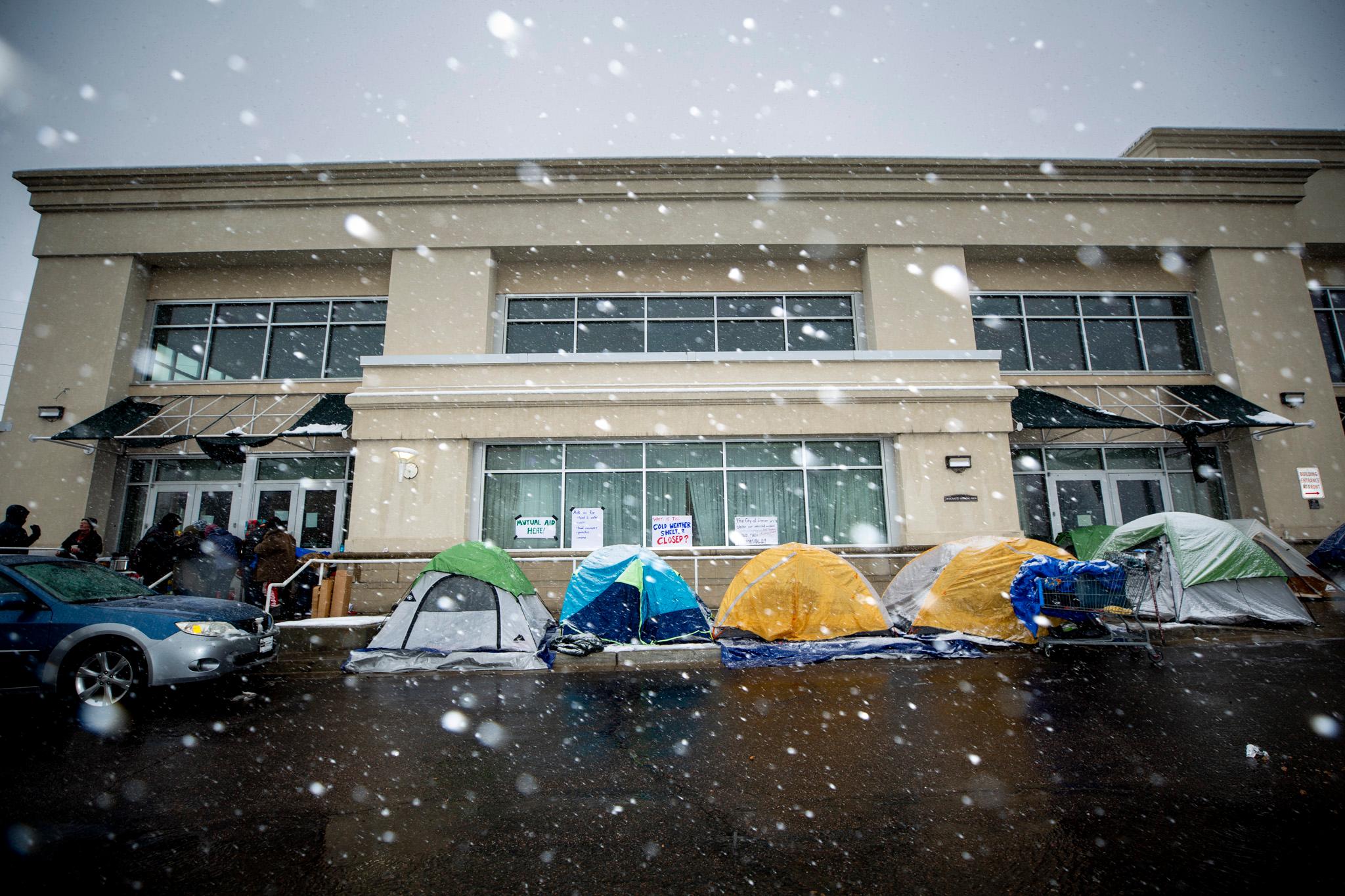
McKinney’s experience is different from most. She has refused nearly every offer of service since moving into her car: shelter, Medicaid, Social Security Disability Insurance, and mental health treatment.
“Anything associated with the government is going to be monitored,” she said.
Still, the city keeps trying.
“I hope we can keep working every single day to find the right services that meet her needs,” Chandler said. “And we certainly have been at it. We've talked about how do we meet that exact person's needs on calls that I've been on. And it's been a challenge for the whole community.”
Two neighbors, two attitudes
The tensions between McKinney and her neighbors had been simmering for years.
Again and again, Dillon had been calling the city to complain about the woman in her yellow car parked on Marion Parkway. Sometimes the city sent social workers. Other times it sent cops, who ticketed her regularly. To Dillon, nothing seemed to help.
At the beginning of the year, McKinney was on the lam from meter maids and Denver police. Cops had dubbed her car a “junker” and, by February, threatened to impound it if she didn’t pay more than $3,500 in tickets and fix her car to make it street legal.
District 3 DPD Cmdr. Joel Bell and his team have also been working to connect her with resources, even as they have fined her thousands of dollars in tickets.
“I look at it as an opportunity to have those conversations once again and see if today's the day,” Bell said in an interview. “Is this the day she is going to accept help?”
For years, the answer has been no. So the department planned to impound the car.
Meanwhile, Berkeley offered a lifeline to McKinney, who is one of her closest friends.
In late February, the retired teacher invited her to park behind her house for a couple of days to save the Eclipse.
Weeks later, Washington Park neighbors became increasingly irritated by Berkeley's generosity and McKinney’s presence.
Her cigarette smoke had frayed the nerves of Berkeley’s next-door neighbor, Dillon. His kids feared McKinney would yell at them if they played outside. It’s true she yelled at anybody she believed was a threat, and three years of blindness had her fearing most people who approached her car.
But it wasn’t just the yelling. Dillon was also tired of her allegedly dumping urine bottles and trash bags in his waste bin. After all, she wasn’t paying for trash service. She had no right.
“I don’t use private garbage cans,” McKinney said recently. “That’s a violation of the law.”
Either way, Dillon’s own lifelong neighbor and friend, Berkeley, was harboring McKinney, and that was eroding his family’s quality of life.
“This is over,” Dillon told Berkeley one day. “Either you’re moving the car, or I’m moving the car.”
Berkeley and her husband depended on Dillon’s help around the house. What choice did she have but to listen to her neighbor and kick out her friend?
To move the unmovable
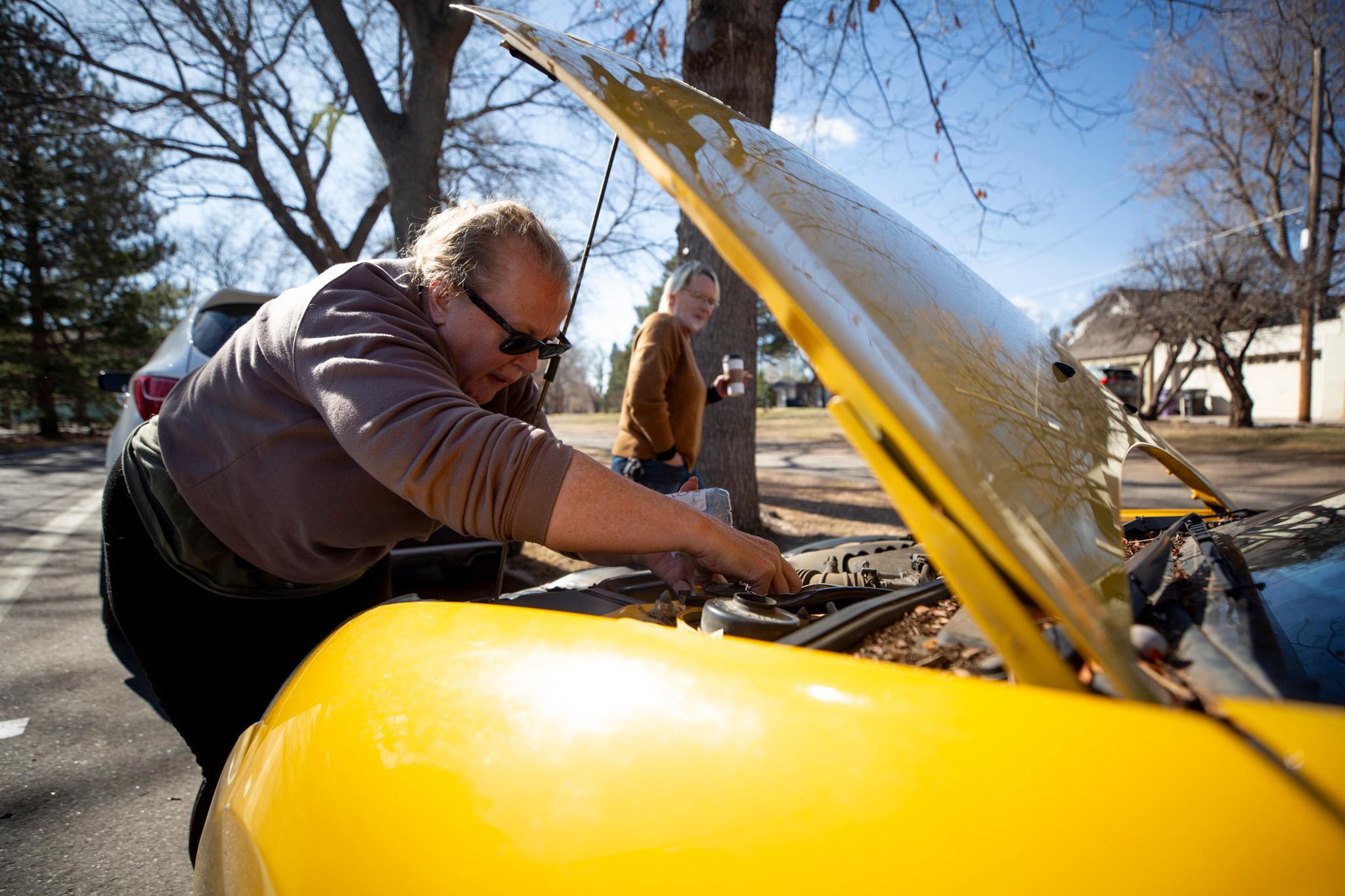
The neighbors who had gathered on that cold March morning tried to find the resolve to force McKinney to move and a strategy for how best to help.
Sturga, who had launched the GoFundMe campaign, was no longer certain that a used car was the smartest use of the money. Perhaps paying off McKinney’s thousands owed in parking tickets would allow her to move back to her spot on Marion Parkway?
Dillon thought paying off the tickets could backfire. If the city impounded McKinney’s car, it might force her into shelter and onto a path toward housing.
Berkeley fretted about forcing her longtime friend to park elsewhere and perhaps lose her car altogether. Without the car, would McKinney not die on the street? But after so many years of watching McKinney survive brutally hot summers and freezing winter nights, Berkeley, like Dillon, would prefer to see her friend in housing.
So would city and grassroots homeless outreach workers. So would the Denver police. So would McKinney herself — at least, in theory.
Housing is something McKinney hasn’t had for a decade, though it’s something she craves for her future.
“As God is my witness, I will never go camping again,” she often pledges in a dead-on Scarlett O’Hara drawl, imagining herself living inside. The city has offered her a room in a shelter many times, though she has refused.
Beck, the grassroots advocate, worried that the police would ultimately take McKinney’s car, whether or not this round of tickets was paid. Why throw away good money?
Others thought a hotel room would be a better use, but McKinney outright refused that.
After three years of blindness, McKinney wanted the money for cataract surgery so she could see again. She also hoped to get the car insured and fixed.
Beck encouraged McKinney to save the money for eye surgery and go to a hotel shelter with the car. Even if she didn’t want to go into a hotel room, McKinney could park in the shelter lot where police would be less likely to ticket her.
“I’m not going to a goddamned hotel room,” McKinney replied.
Out of options, Sturga drove McKinney’s car back to Marion Parkway. By afternoon, a Denver police officer had booted its tire.
In 72 hours, she would lose the car if she did not pay her outstanding fines, according to a notice Sturga read to her.
Why she won’t go inside
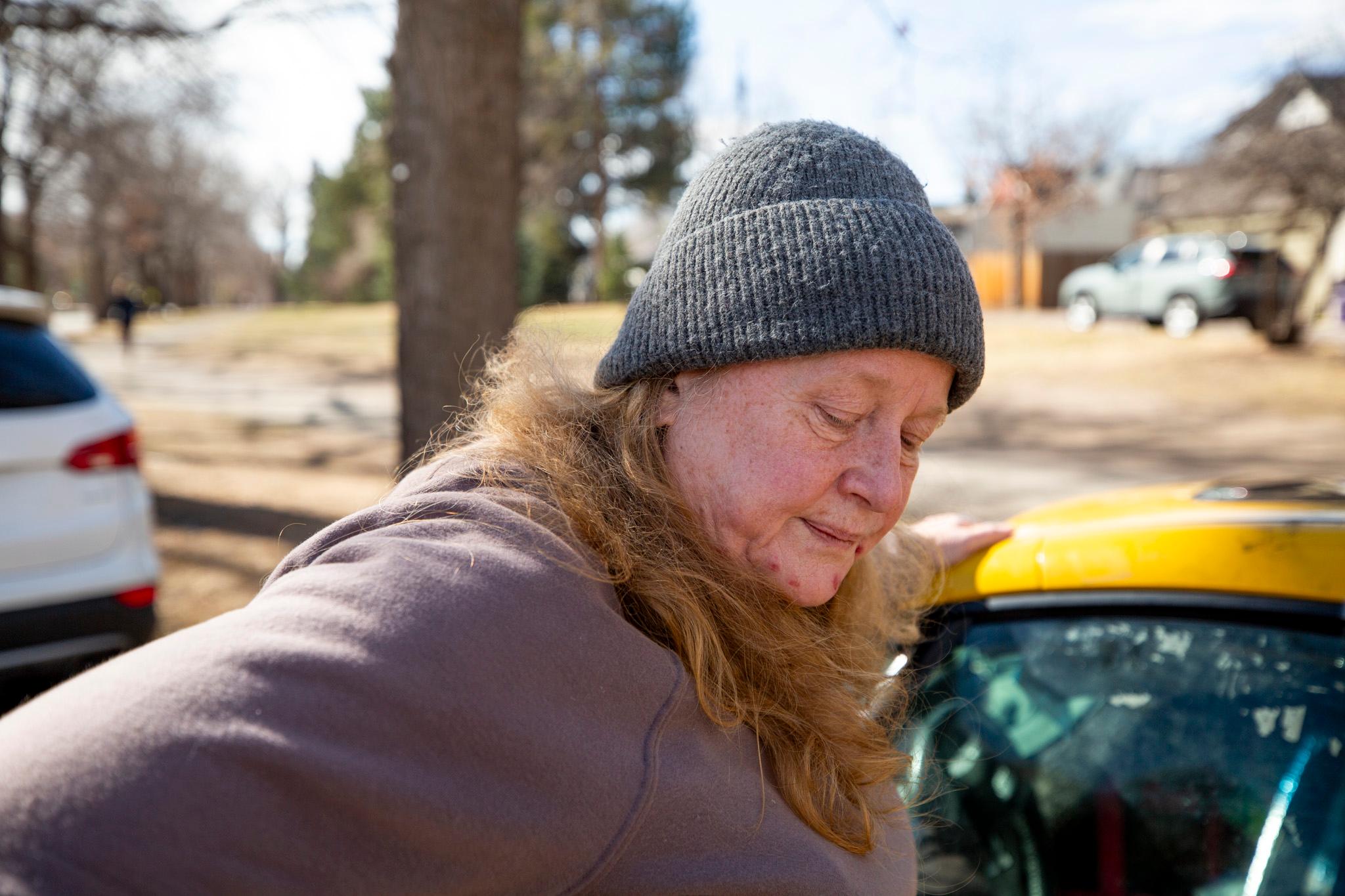
McKinney tells her story like this: She grew up in a military family and lived in Thailand and the Philippines during the Vietnam War. As a kid, she was flown into Vietnam, where she was exposed to Agent Orange, the toxic chemical the U.S. military used to destroy the jungle. That explains the sores that sometimes scar her chin, she said.
A family member, who spoke on the condition of anonymity, could not verify the story beyond confirming that she spent part of her childhood in Thailand.
McKinney’s mother was a “histrionic drug addict” and accused her of dealing heroin, she recalled, while she was actually active in her youth group and playing pipe organ at church. Her father, a Republican, wasn’t particularly interested in her perspective.
“When I want your opinion, I'll give it to you,” he would say.
Eventually, McKinney attended Colorado College, where she formed opinions of her own, hobnobbed with the children of the wealthy, and studied Camus and Chaucer — writers whose works keep her from falling into despair to this day. After graduating, she worked as a technical editor for Hewlett-Packard and General Electric, a teacher and then as a nurse assistant.
She married, the first of three times, and had a child. She eventually decided to go to law school at the University of Denver to pull herself and her son out of working-class poverty.
She practiced law at private firms before getting a cushy government job with the Department of Veterans Affairs. While there, she alleged, she discovered the Veterans Benefits Administration was involved in forgery and sharing private health information to external entities.
“I'm jumping up and down and saying, we can't do this,” she said. “And the people at the central office at 1800 G St. in Washington, D.C., say, ‘Oh, that's just Suzanne. She's just being difficult.’ Well, I wasn't being difficult.”
Around then, she said, her coworkers at the VBA retaliated against her.
“It was swift and brutal,” McKinney said.
“My work product was being altered online, and as a result, I was shot in the head. I have an entry wound here,” she said, pressing her fingers to her unscarred forehead.
After the alleged shooting, she said, her mental health fell apart.
In 2016, she filed a federal lawsuit, accusing VBA employees of shooting her in the head and stalking her.
A judge dismissed the lawsuit, describing the complaint as “frivolous.” But she maintains it’s all real. Another judge barred her from practicing law in Colorado because of an unspecified disability — a decision she argues violated the law.
As the lawsuit played out, McKinney moved into her car. Her aim: to keep her family safe from retaliation. She feared that if she went near a shelter, she could be murdered.
Obviously, her car felt safer than that — even if the neighborhood came with some risks.
Neighborhood watch
Over the past decade, cataracts have weakened McKinney’s vision — making it hard for her to see the people who have both harassed and helped her.
People have banged on her windows, broken her side mirror and attempted to pry open her door with a crowbar, she said.
One homeowner, McKinney said, regularly mocks her by saying it’s time for her to give “blowjobs” at the Circle K to make money.
Another woman has criticized McKinney for drinking or using drugs, neither of which she does.
A third said McKinney’s car smells like feces. McKinney acknowledged the car is “rancid” inside. It’s impossible to clean when she’s afraid her belongings will be stolen if she sets them outside. But McKinney’s car smells like sour cigarette-and-coffee sweat, plastic bags, sanitizer and aging paper — not feces.
Other neighbors have been more friendly.
One man has tapped on her window with a recurring bit: pretending he’s John Elway. Another plays guitar outside his garage, soothing her.
Some neighbors have helped her move the car to avoid tickets, though sometimes they forget, and she has had to do it herself. On her own, she uses the hazy shapes of trees and the white stripe on the road to keep her car in the parking lane as she clumsily attempts to park somewhere legal.
She prides herself on never knocking on neighbors’ doors, never accepting government subsidies, never committing crimes, and never asking for money — even from neighbors who want to do what they can.
Rise and shine
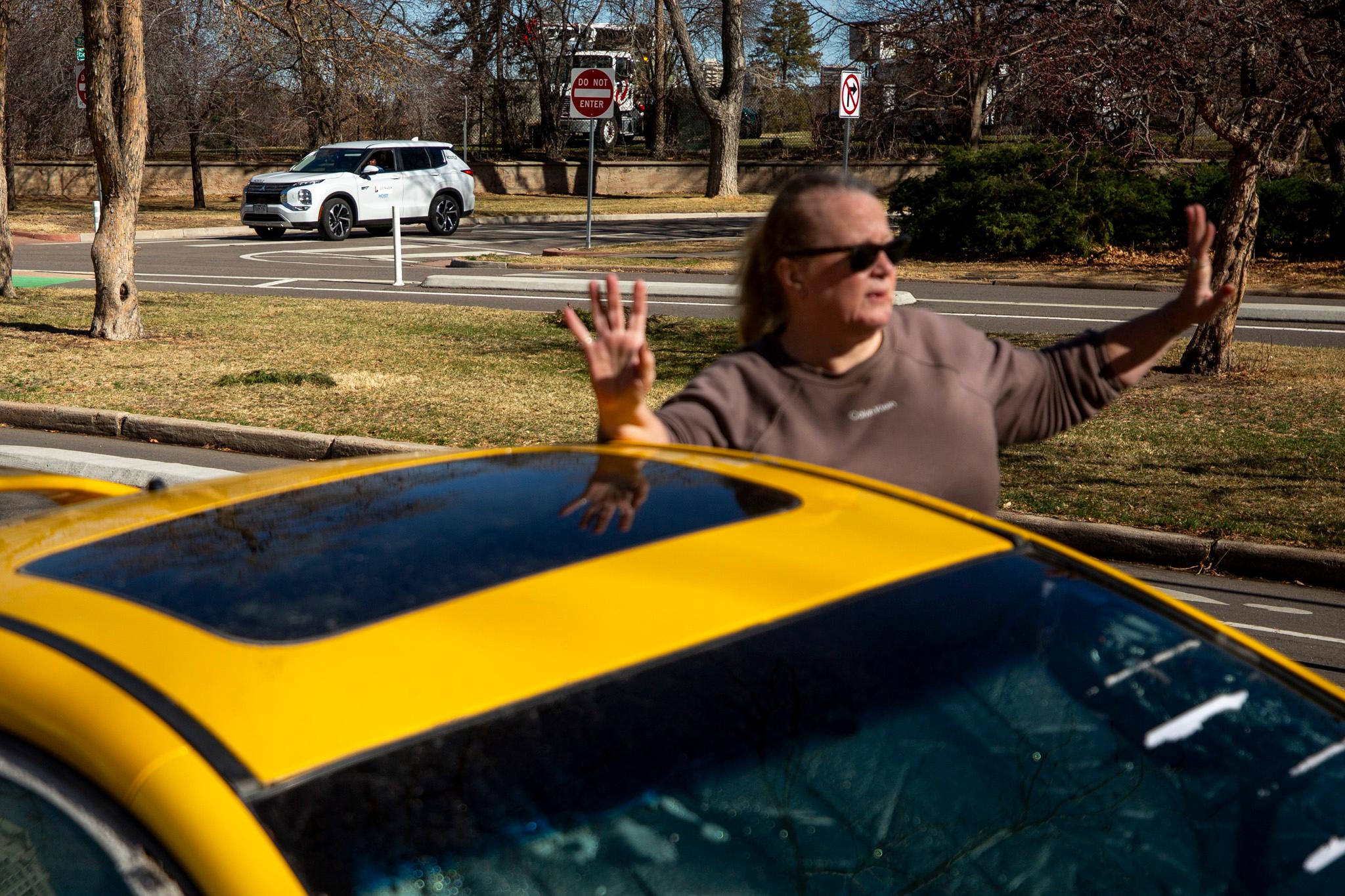
Two days after Sturga drove the yellow car back to Marion Parkway, McKinney woke to a knock on the window of her booted Eclipse.
“Get away from my car,” McKinney said.
“I'm sorry, but you got this boot on your tire out here and the city's taking your car,” Beck, the advocate, warned.
With an early spring snowstorm approaching, McKinney could lose everything if her car were
impounded: her home, clothes, blankets, boxes of legal files, stashes of food, coffee and office supplies.
Sure, the city would give her time to move her belongings. But where would she store them? And yes, outreach workers would offer shelter, but she had always refused that and planned to do the same.
Without her car, she might not survive the streets, Beck warned her.
“Get away from my car,” McKinney said.
Beck was used to people begging the city for housing and still not getting it. How could McKinney refuse shelter the city was actively offering?
“Suzanne, the city is really sending a clear message to you right now to get out of this neighborhood,” Beck said.
“Please get away from my car,” McKinney said.
“I don't think you understand how urgent this situation is right now,” Beck said. “They're taking your home.”
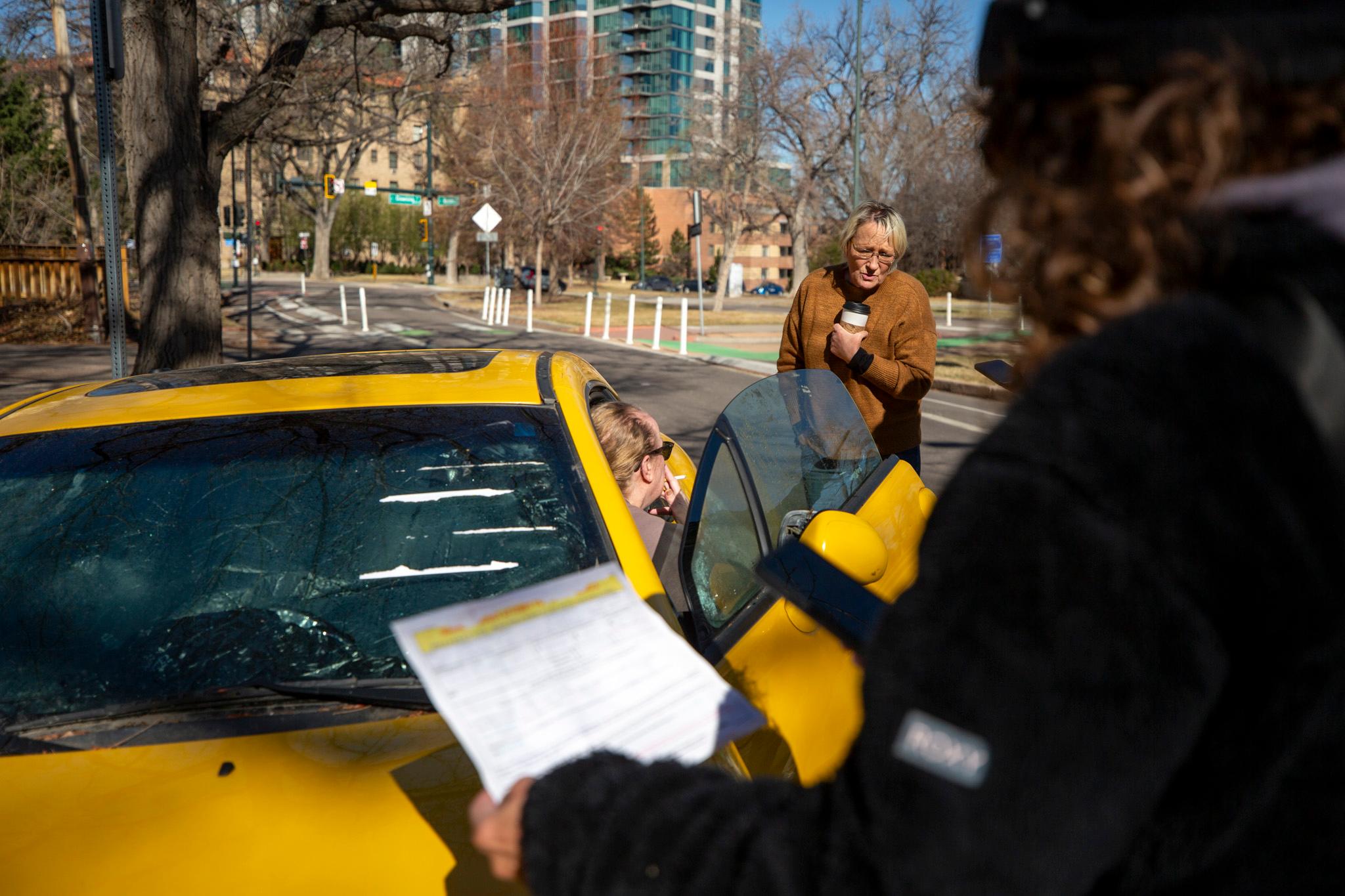
Beck had seen the city take the cars of people experiencing homelessness many times and knew McKinney might not survive that. The advocate had been calling anyone she could think of for help.
Neighbors, police, housing department case workers, strangers and friends were all begging McKinney to move inside. But the harder they pushed, the more McKinney believed they were part of a vast federal conspiracy to destroy her.
“We want to help you move,” Beck said.
“I don’t want your help.”
Calling the cops
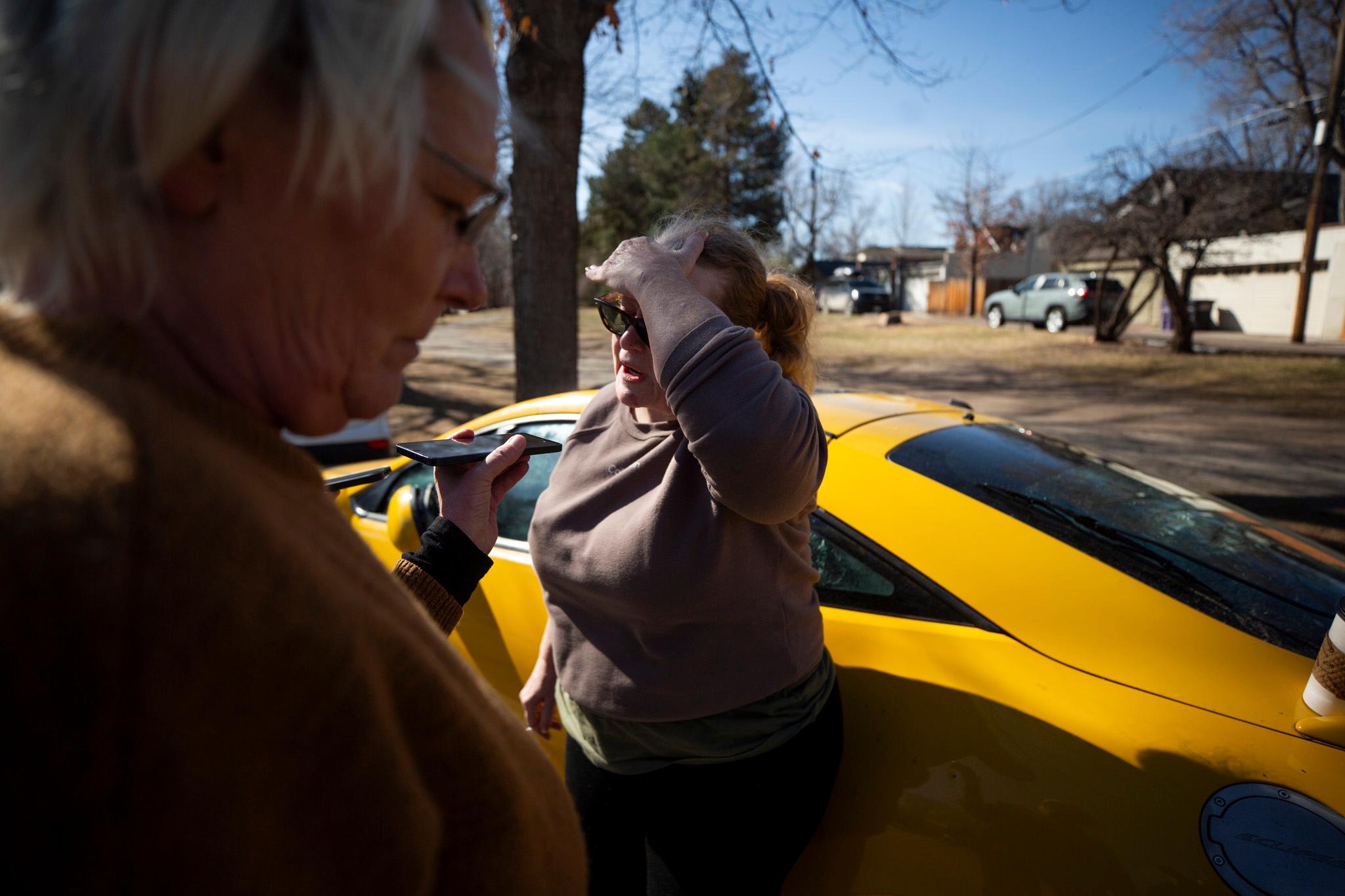
A few minutes later, Beck called DPD District 3 Cmdr. Joel Bell and put McKinney on the phone. McKinney launched into a frenzy of legal analysis, threatening the city.
“There's a lot of people that love you and are trying to help you,” Bell interrupted her.
“Trying to help me — what — go to a hotel room?” she said. “I'm in the middle of a federal district court lawsuit where there are people who want to rape and murder me.”
“Let him speak,” Beck said.
“Suzanne, please, listen to me,” Bell said. “There's a lot of people that love you and are honestly trying to help you.”
“This is not loving,” she shouted.
She told the commander that she had been writing letters and leaving voice messages asking for help from the Mountain View Friends Meeting, a Quaker congregation she had frequented decades ago with her son.
Nobody had come yet, but she was holding out hope.
Her plan, she said, was to be towed to the Quaker meeting house, where she believed the Friends would protect her.
The following morning, Sturga, McKinney’s friend who had launched the GoFundMe, paid off $3,570 in tickets to prevent the police from taking the car.
The city removed the boot — and lost the only leverage it had to force McKinney inside.
Chandler, with the city’s housing department, was frustrated. The city had finally had a strategy to force McKinney into shelter by impounding her car, and the community’s donations had undermined it.
“I am grateful for people's desire to support, but knowing that there's a system in place that is designed to do this and is actually quite effective at it on the scale of thousands on an annual basis is really important for the public to understand,” Chandler said.
But 10 years in, that system had not worked for McKinney.
The meeting of the Friends
The afternoon Sturga paid off the tickets, McKinney dipped into her savings to pay a friend to tow her to the Quaker meeting house in the Observatory Park neighborhood.
Inside, an immigrant living on the second floor heard a knock at the door, longtime Quaker Paula VanDusen recalled. He was terrified it was ICE and did not respond.
McKinney spent the night parked outside.
That Sunday morning, the Friends met to worship and were startled to find McKinney behind the building.
Who was this homeless woman parked outside? Was she safe? How could children play outside if she were there? What would the neighbors think?
The congregation's trustees decided McKinney was a liability and needed more help than they could offer. She had to go. They called the STAR team, Denver’s unarmed first responders who intervene when people may need mental health resources. But all STAR managed to provide were some handwarmers, VanDusen said.
Then the police arrived to arrest McKinney for trespassing, she said.
But VanDusen, who had spent years living and working with homeless people at a Catholic Worker house, stopped them. The police helped convince the Friends to give McKinney a couple of days to figure out where to go next.
“I am so angry that they would even consider arresting her when she is completely harmless,” VanDusen said.
McKinney could not believe these were “real Quakers.” They were betraying everything she thought the Friends valued — a sentiment VanDusen shared.
Congregants scrambled for solutions, ultimately making it clear that McKinney could not stay, VanDusen said. They thought she was putting their immigrant guest at risk by drawing police attention.
Just days after McKinney arrived at the meeting house, the Friends, again, threatened to have her arrested. They hoped the threat would force her to accept the city's offer of shelter, said the meeting's volunteer clerk, Lisa Motz-Storey.
"I thought we were giving her a deadline to go into housing," Motz-Storey said.
Instead, McKinney paid her friend to tow her back to the only other place she believed she could be safe: Marion Parkway in Washington Park.
For a few days, Dillon thought McKinney was finally gone.
Dillon believed the Quakers had bailed McKinney and Washington Park out of a bad situation — no more screaming, smoke or trash.
But then he saw it — the yellow car back on Marion Parkway.
Dillon was furious. He started texting neighbors, wondering what went wrong, why she was back, and how all of this effort to get her to safety and into shelter went so awry.
“I know people are trying to help her, and I know it's hopefully going to end with an outcome that will be — I don't know — good for everybody,” Dillon said.
But if that didn’t happen, Dillon planned to find a way to force her out.
Meanwhile, Sturga had a plan of her own — one that would change McKinney’s life.
McKinney has learned a lot about surviving in a car
Prepare constantly and always be a few steps ahead.
Avoid scurvy, diarrhea, and other diseases, and stay as clean as you can when those inevitable diseases strike.
Keep your windows rolled up, or people will throw things at you.
Keep on good terms with your community. Don’t ask for anything. Don’t commit crimes.
Use handwarmers. At night, wrap your feet in the old sheepskin your neighbor planned to throw out, but don’t let the sheepskin get too rancid.
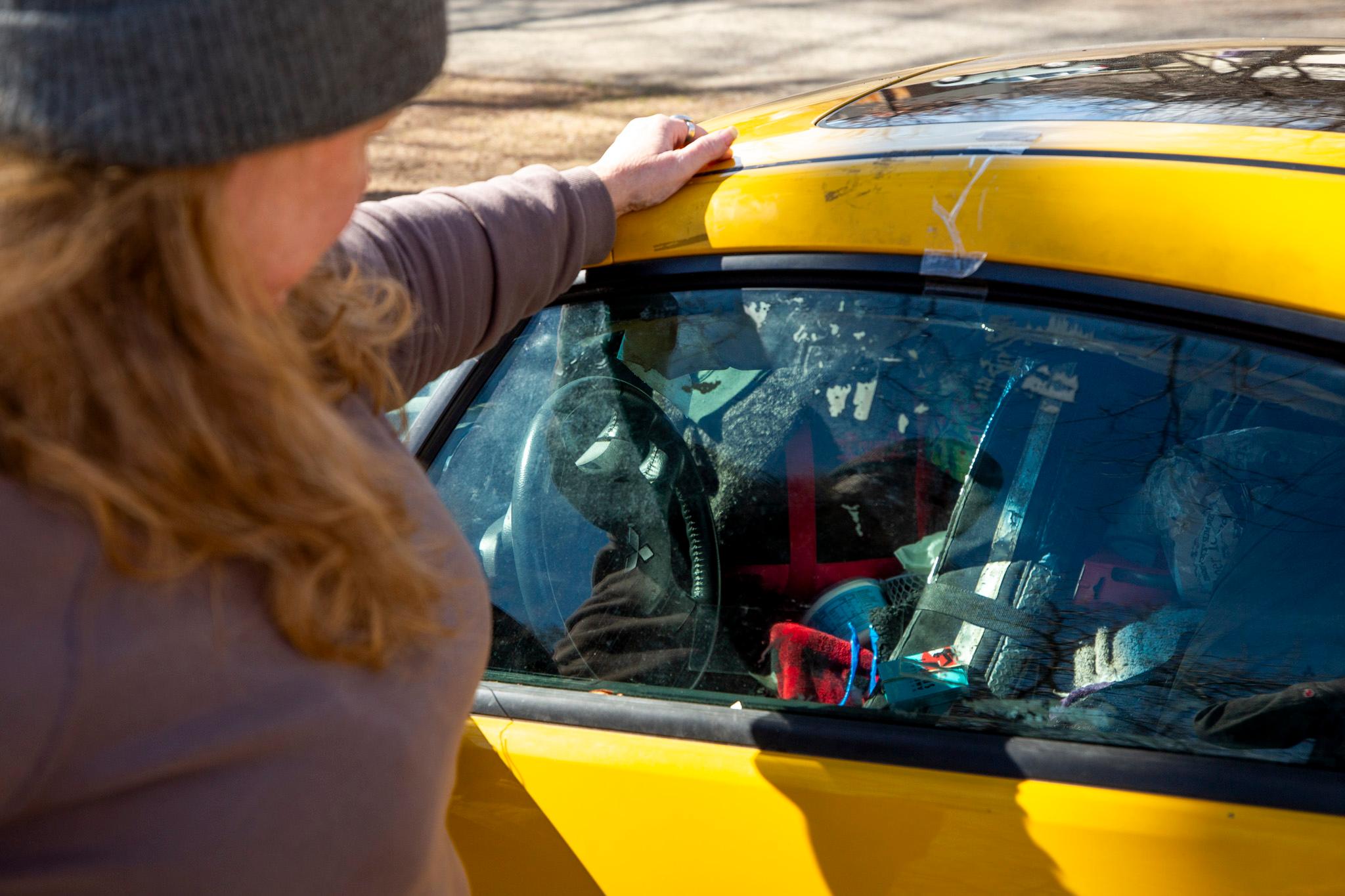
Fill your water bottles and keep them in your sleeping bag, against your body, so they don’t freeze. Urinate in a bottle, so as not to expose yourself in public. Throw the bottle away as inconspicuously as possible. Don’t confuse the bottles.
Try to ignore those who claim you’re a drug addict, a drunk, a whore, a blight, a nuisance.
Stay away from shelters and services, so you don’t get sucked into the drugs, the drinking, the violence and the futility of it all.
When life feels unbearable, reminisce about how you spent Friday nights playing in an all-woman punk band, Random Sheep, and Sunday mornings playing organ at the college chapel.
Detail your analysis of Hunter S. Thompson’s writings and how they are a form of literary criticism. Recall that you met Hunter S. Thompson when you were younger.
Write sketches mocking the “homed” and their vast hypocrisies. Mail them to a family member, hoping he copyrights them and turns them into YouTube videos.
Albert Camus offered good ideas about suffering. Think about those.
A clearer future, a canceled appointment
While the neighbors debated what to do in the weeks ahead, McKinney and Sturga worked together to schedule two long-awaited eye surgeries.
Cataract removal would cost $3,800 an eye, and Sturga had already raised thousands but needed thousands more. She helped her friend set up an appointment.
On the day of her surgery in late March, McKinney lost her debit card, panicked, and canceled both procedures — blaming Sturga. The card, it turned out, was finally found on the floorboard of another neighbor’s car.
Soon after, Sturga rescheduled the first eye surgery for April 21 and the second for a couple weeks after that.
Sturga hoped her friend would keep the appointments.
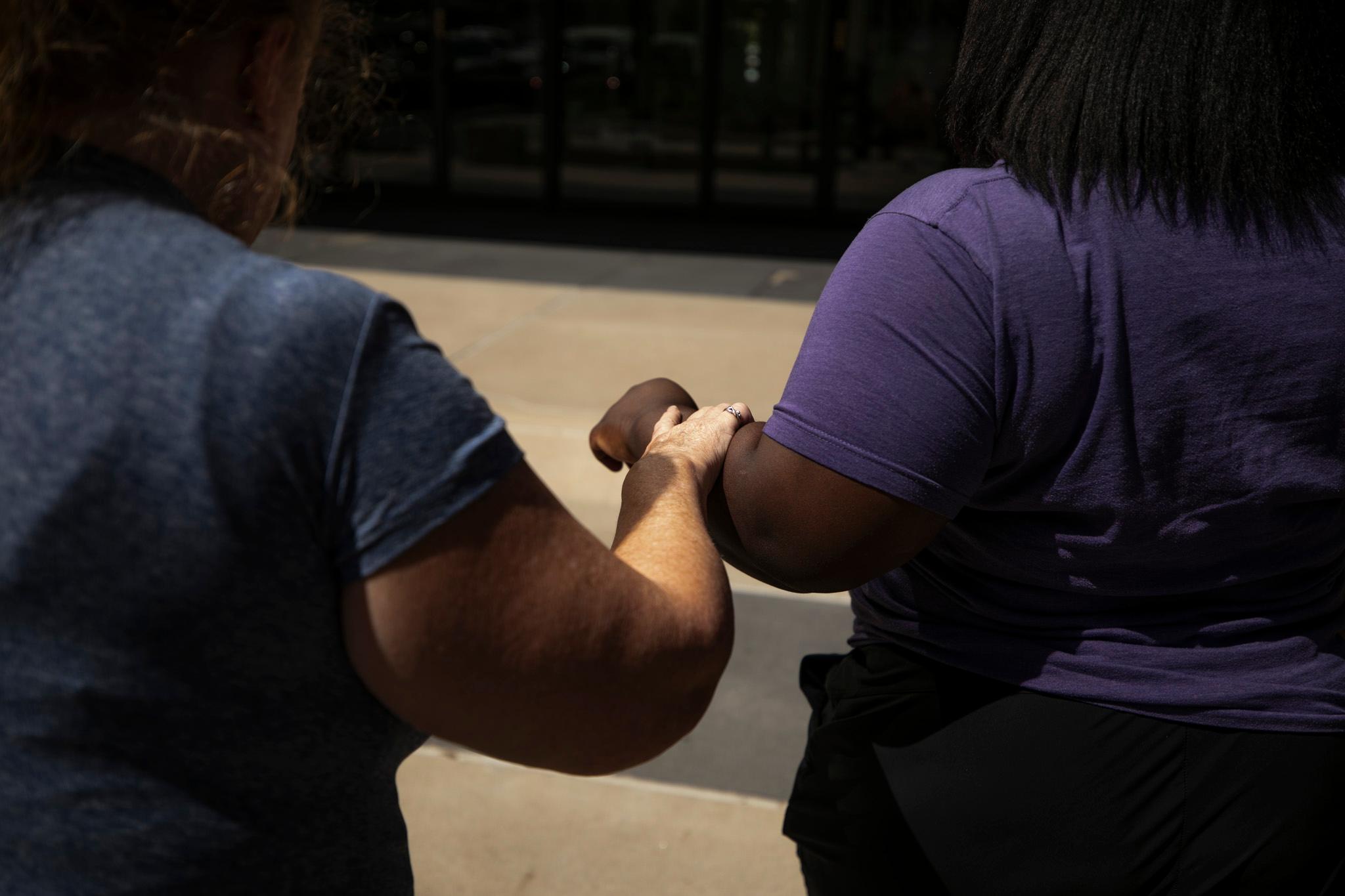
New vision
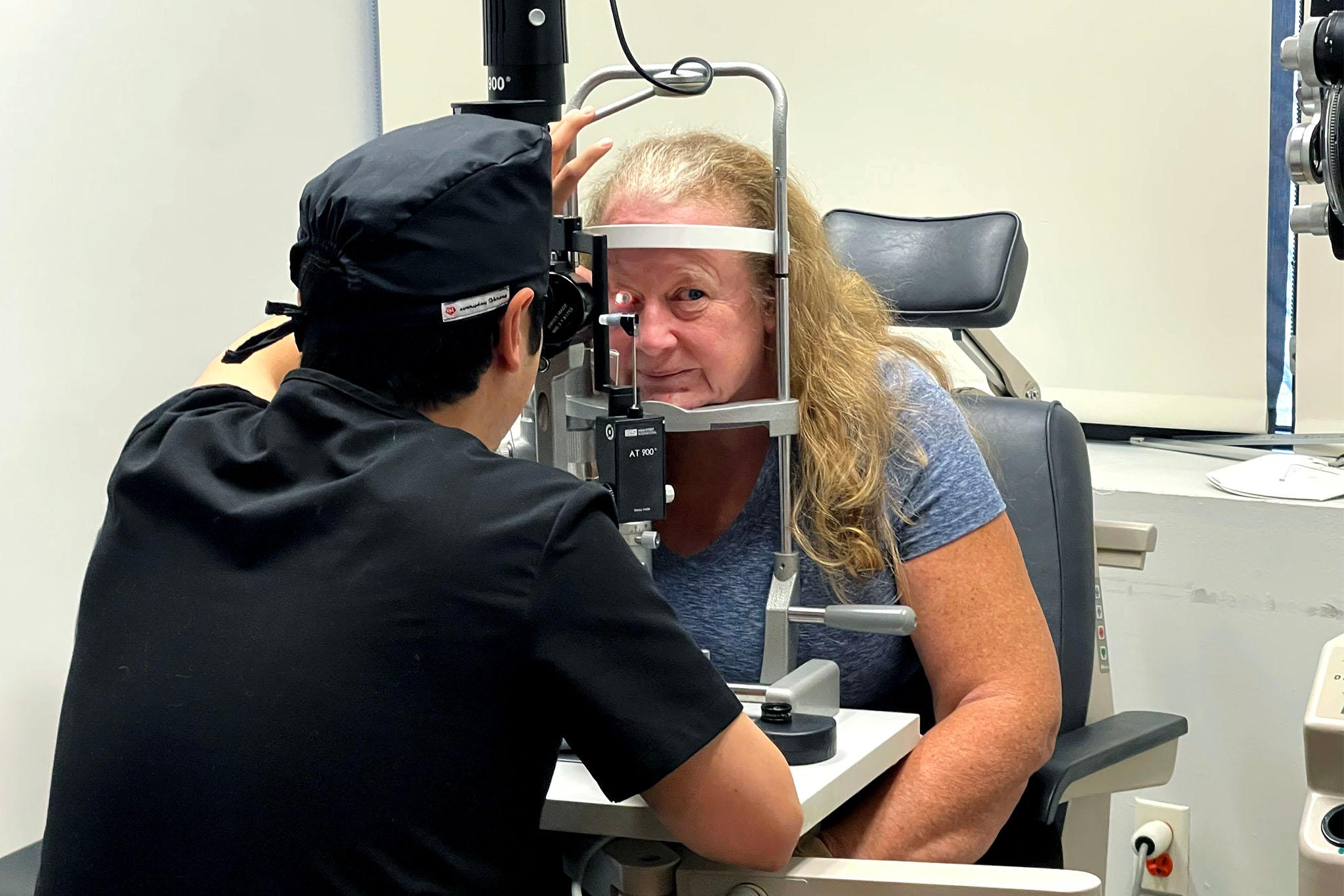
In mid-April, around a month after McKinney moved from Berkeley’s driveway back to Marion Parkway, city outreach workers took her to meet Sturga at a Cherry Creek eye surgery center.
As they escorted her into the building, she grumbled about how she hadn’t had her coffee yet.
She, the case workers and Sturga negotiated who would pay what, and told a receptionist that the Lions Club of Denver would also be contributing. The conversation was as chaotic as it was bureaucratic. McKinney demanded receipts.
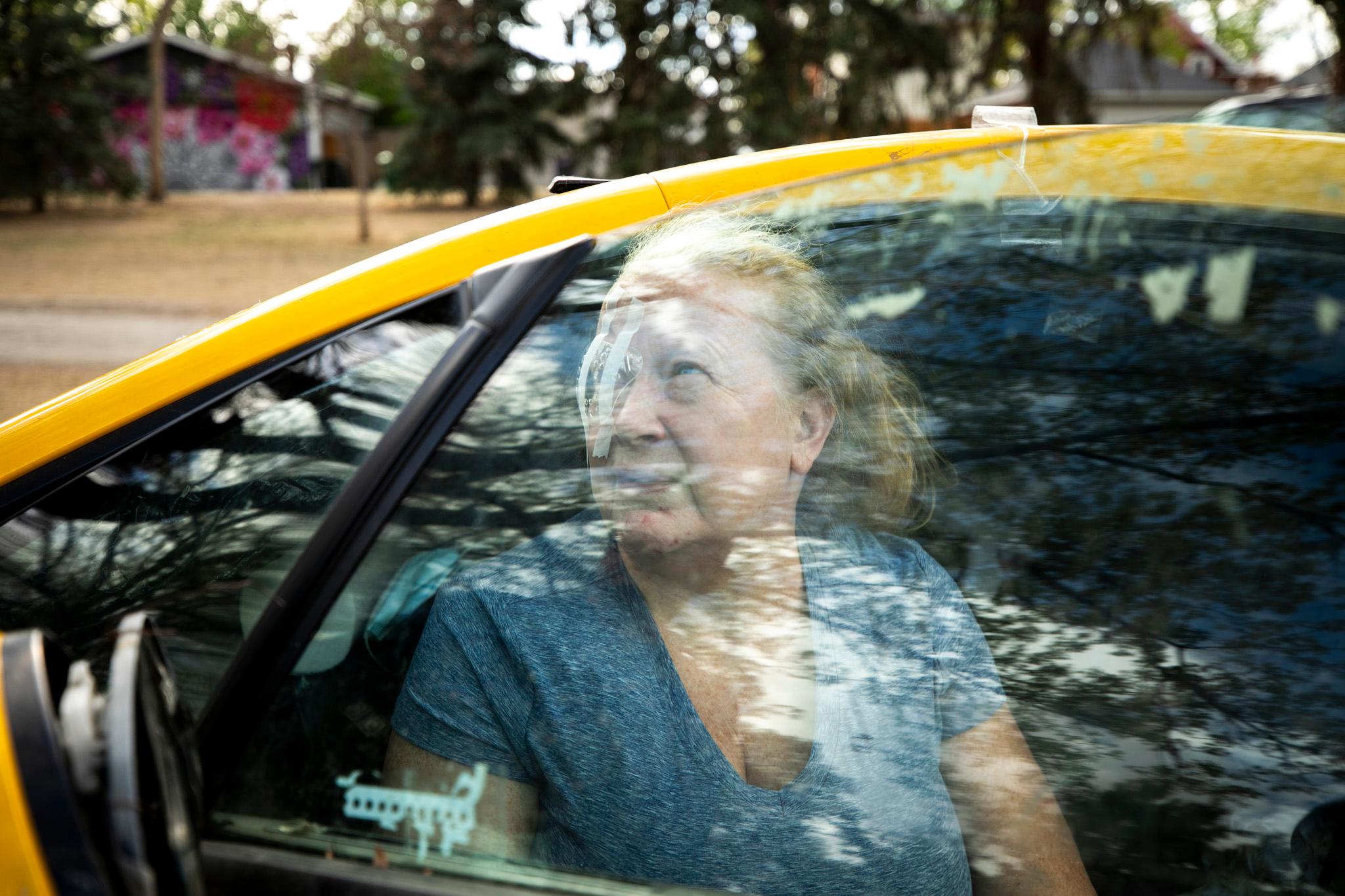
When it was finally time for the procedure, a young doctor removed the blinding cataract from her right eye and taped a clear, plastic patch over it.
Minutes after the surgery, city case workers and Sturga surrounded McKinney in the lobby of the doctor’s office. He carefully untaped the patch from her eye.
“Oh my God,” she said, eyes watering. “I can see.”
She grinned, making sense of the faces around her, neighbors and city workers who had organized to get her here. She read the letters off a vision-test poster, one after the other. She looked outside and said she saw snow — but it was actually bright sun hitting white concrete on this warm April day.
In early May, if Sturga can raise the money for the second surgery and the other eye is fixed, McKinney will once again have depth perception. She’ll be able to monitor street-sweeping times and safely move her car to avoid additional tickets. She will be able to scout out a private place to park in the neighborhood. She may even go up to the mountains for a few days, get away from Washington Park and all the neighborhood drama.
With two working eyes, McKinney says she will be better able to identify what’s safe and what isn’t.
She may find stability and return to work, she said. She may save up for an apartment, find a place of her own. She may never have to sleep in her car again. She’ll have a fighting chance.
After surgery, she returned to her Eclipse to heal. She cracked open a can of coffee, lit a cigarette and sucked in the sour smoke.
She’s wanted vision this clear for years.
Editor's note: This article was updated to include additional perspective from Lisa Motz-Storey, the clerk of the Mountain View Friends Meeting.