The Denver City Council is debating whether to ban law enforcement officers from wearing facemasks.
If it’s approved, the policy could allow Denver police officers to arrest immigration agents and other law enforcement officers who conceal their faces with masks while making arrests or detaining people.
“It's a moral and constitutional question about how government power is exercised in the public, and what we owe both the people that we serve and the public servants asked to carry out these policies,” Councilmember Flor Alvidrez said in a committee meeting.
She and the bill’s other sponsor, Shontel Lewis, said the proposal was a response to the behavior of federal immigration agents.
Doing so could, in turn, put local police at risk of violating federal law for obstructing law enforcement, Marley Bordovsky, an attorney with the City Attorney’s office, told council members.
The proposal still has to be refined and presented to a city council committee, though which one has yet to be determined. If it advanced it would be voted on by the full council in the coming months.
How did the city get here?
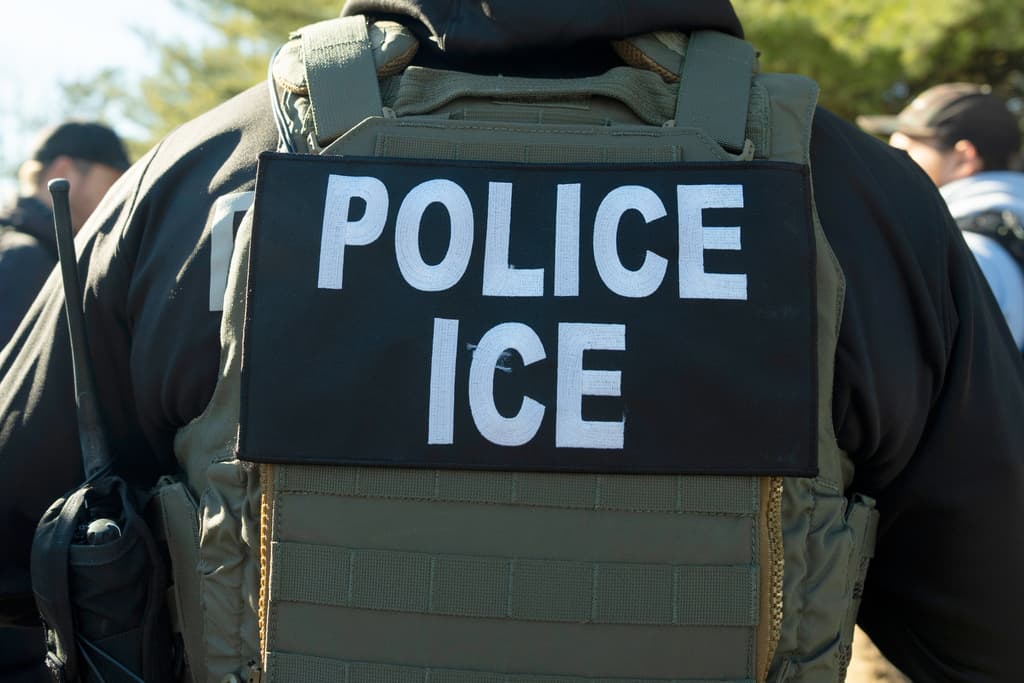
Some city council members worry Immigration and Customs Enforcement agents have been using masks to conceal their identities for months as they roam the country, picking up people and in some cases putting them on a path toward deportation.
“This practice raises serious concerns about transparency, accountability, and public safety—particularly when individuals are being physically restrained or removed from public spaces,” according to a slideshow presented by Alvidrez and Lewis.
They argued masking is an intimidation tactic and quoted federal judge William G. Young, who said, “ICE goes masked for a single reason — to terrorize Americans into quiescence.”
Police hiding behind masks whittles away at public trust and can lead to a drop in reported crimes, the bill’s proponents argue. The masks also make it easier for imposters to pretend to be law enforcement and take advantage of the power and encourage vigilante behavior.
Doing away with the masks is in the interest of public safety and democracy, proponents argue.
What the mask ban would do
The proposed law would ban all law enforcement — local, state and federal — from wearing masks while detaining, arresting or otherwise restraining an individual’s physical movement in most situations in Denver. Officers could also not conceal their faces in city buildings.
Here’s how proponents define masks: “An opaque mask, garment or headgear that conceals or
obscures the identity” of officers. Those include balaclavas, gator masks and ski masks.
The bill would still allow the use of helmets, transparent face guards, medical masks and protective eye gear. The bill would also allow officers to go undercover and participate in SWAT and tactical operations.
Councilmembers Lewis and Alvidrez said they wrote the bill in conversation with Denver Sheriff Elias Diggins and Police Chief Ron Thomas. Their departments didn’t immediately respond to requests for comment.
How controversial is this?
Most council members present at a Monday committee meeting supported the spirit of the amendment, but not all were convinced that passing a law was the right move.
Councilmember Chris Hinds argued law enforcement should be held to a higher standard than the broader public because officers are empowered to kill. Transparency is crucial and government officials should not be allowed to conceal their identity, he said.
Council members expressed concerns about how other municipal and state law enforcement departments would view the change.
“How do we enforce it?” asked Councilmember Jamie Torres.
The Denver Police Department would be in charge of enforcement, potentially arresting anybody violating the law — including fellow law enforcement, the city council’s attorney Jon Griffin said. Local police also could cite offenders with a ticket.
Griffin explained that federal supremacy — the right of federal law to trump municipal law — is currently being challenged in court and will determine whether such policies could be enforced.
Council members and attorneys also discussed the risks of local law enforcement violating federal law by arresting federal agents at work.
Councilmember Sarah Parady wanted the proposal to go further. She suggested the law require all law enforcement, including ICE, show a badge number and present their name and badge number when asked.
Even those who questioned the new policy appreciated its intent.
Councilmember Amanda Sawyer said the policy was a valuable statement on the city’s morals and values.
“But as a law that is going to be on the books for the city and county of Denver for the next 100 years, it has to be right,” she added. “And I'm really concerned about the actual on-the-ground implementation of the enforcement piece of this.”
But proponents say changing the law is urgent.
“I think philosophically, I'm willing to be wrong in the future in order to protect our communities now from the terror that they're experiencing in real time,” Lewis said.
Multiple council members questioned whether the measure would have any actual effect on ICE or other federal agencies’ behavior
“I don’t expect this to do anything … as far as changing ICE behavior,” said Councilmember Paul Kashmann.
Even so, he argued the bill would clarify Denver’s values and is worth doing.