Updated at 12:31 p.m. on Tuesday, Feb. 3, 2026
When Aldi announced it would open new stores in Colorado as part of a $9 billion nationwide expansion, fans of the low-price grocery giant rejoiced.
Aldi’s venture into Denver and Colorado Springs’ metro areas are years away, but people are already looking forward to lower prices and competition for Kroger and Safeway grocery stores.
That got us wondering: Where would a new grocery store make the biggest impact?
Paola Babb, who works as a neighborhood food program supervisor for the Denver Department of Public Health and Environment, said opening accessible stores is an obvious way to alleviate food insecurity.
“We see that bringing in a grocery store is one of the most commonly referenced recommendations and asks of community that they want to see the city support,” Babb said.
The city of Denver categorizes grocery stores as “large” — like Walmart or King Soopers — and “small” — like Trader Joe’s — as well as specialty and ethnic stores.
When we put all those stores on a map, we found that most of the city falls within a mile of a small or large store. Especially in central Denver, many residents can reach grocery stores with relative ease.
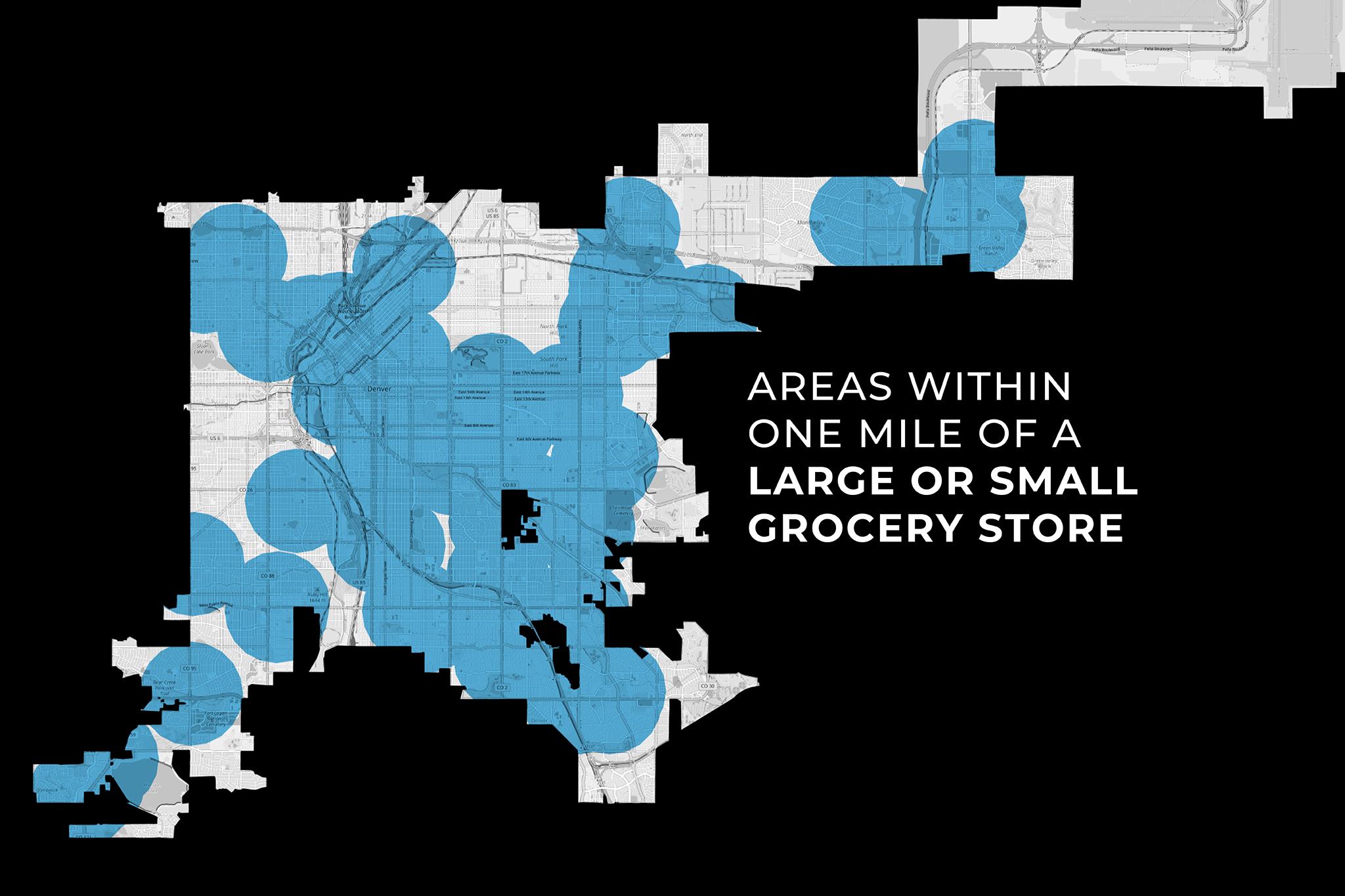
But major gaps are apparent, especially on Denver’s outskirts.
“We do see that a lot in southwest Denver. We are lacking a lot of those large grocery stores. We see it a lot also in the Montbello, Northeast Park Hill, Elyria-Swansea areas,” Babb said. “Those are the areas that we have seen the most where they don't have access to grocery stores.”
It isn’t just happening in the “inverted L.” Even parts of Washington Park, one of the wealthiest neighborhoods in Denver, lack nearby grocery stores.
However, those areas wouldn't be considered food deserts by most definitions — the federal government says a food desert is a mile from supermarkets and large grocers, but also that its residents have lower incomes.
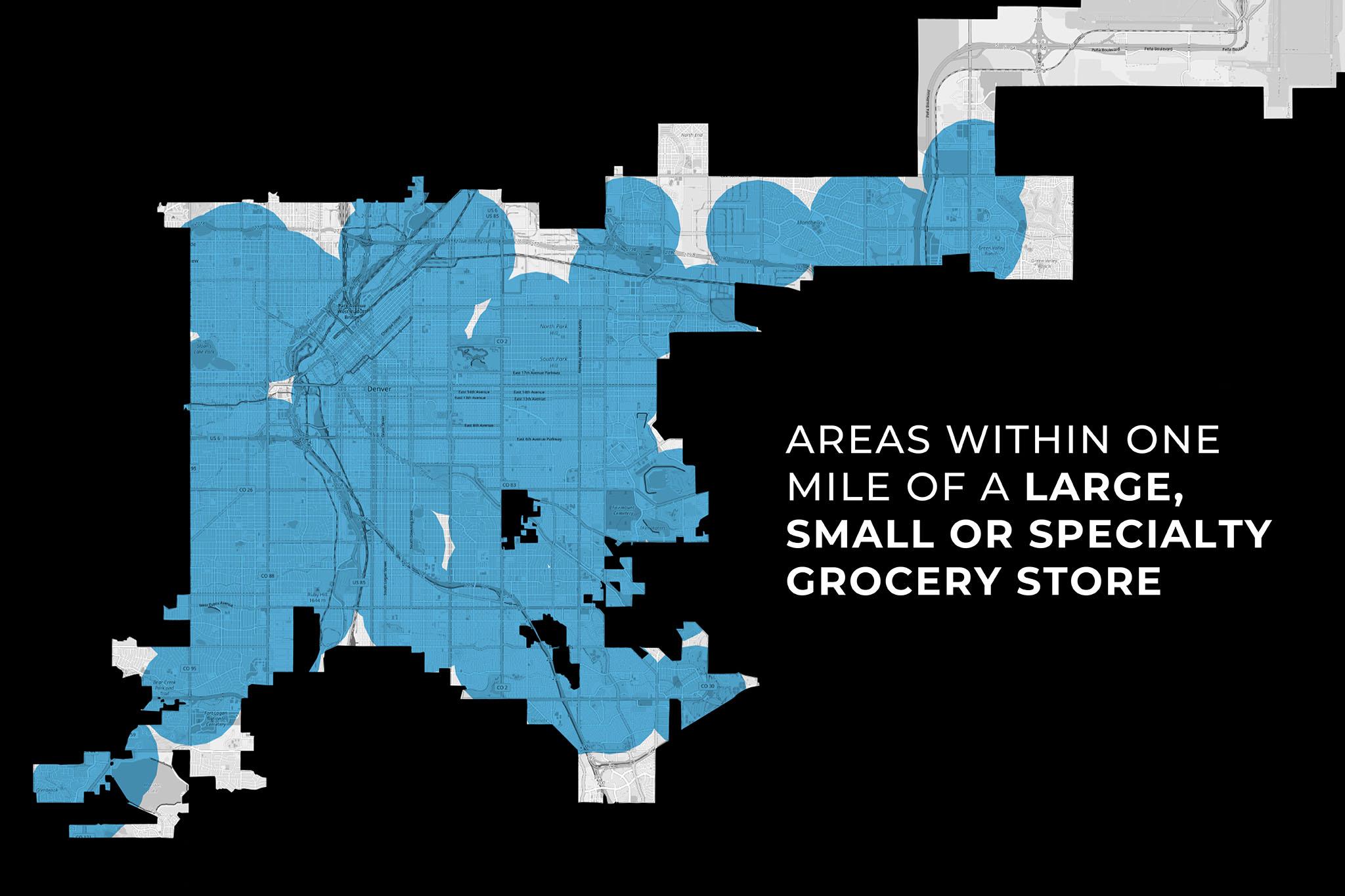
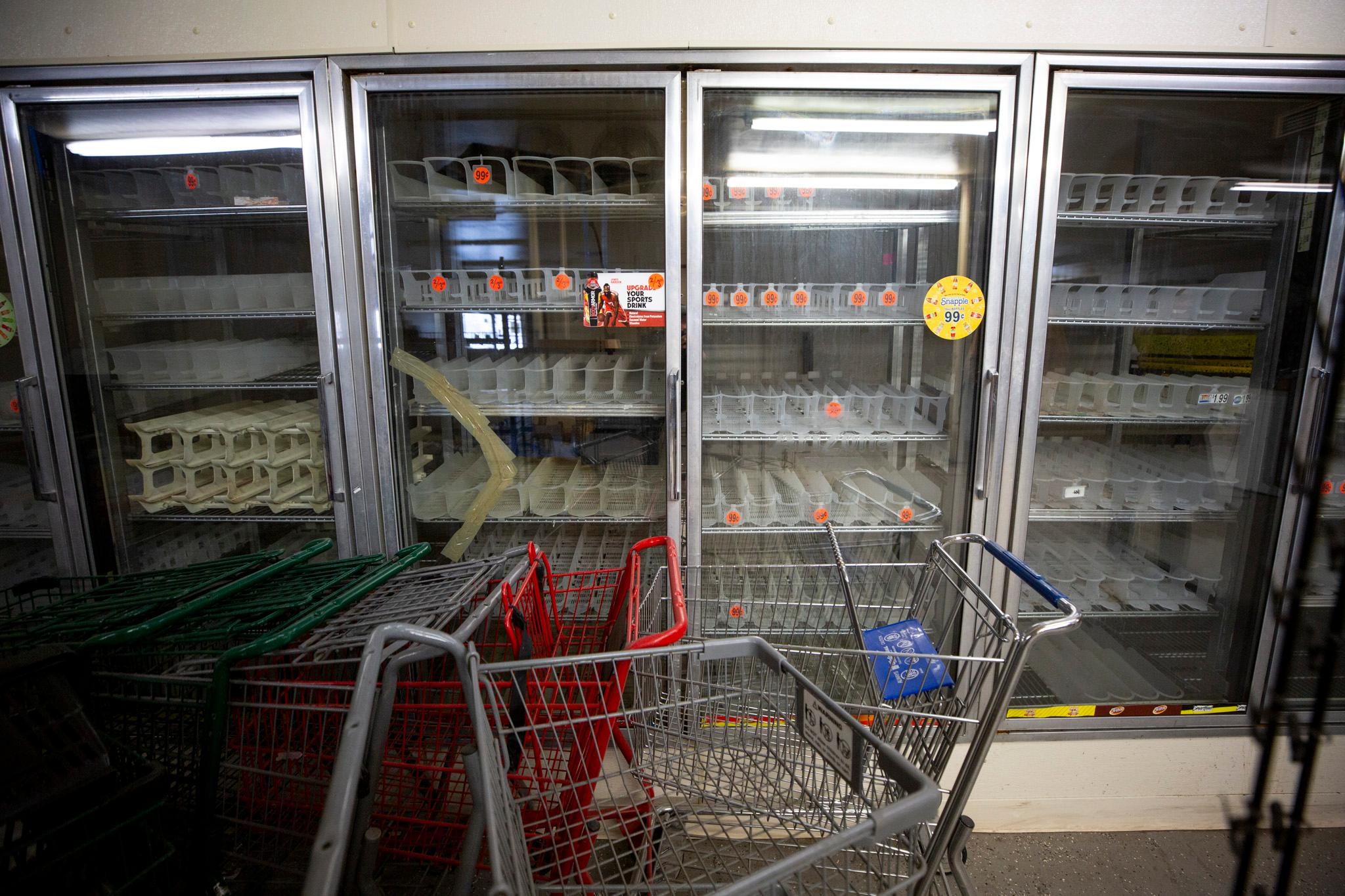
Specialty grocery stores fill in some of the gaps in the map. But few provide access to a full array of goods. For example, two specialty grocery stores along Peoria Street in Montbello — the only grocery stores listed in the area — are butchers and don’t focus on selling fresh produce. Some are bakeries that only sell bread.
The same goes for convenience stores — if added to the map, nearly all of Denver would be covered, but Babb says they provide few fresh and healthy items.
“We have convenience stores all across the city,” Babb said. “However, a lot of them are located in our major corridors, which poses a lot of safety concerns. If someone's having to walk, is it all that safe? But also do they even provide all of the foods that people want and need and know how to use to cook the meals that they're eating on a daily basis?”
It’s worth noting that our map does not include stores in neighboring cities.
The city is trying to address food insecurity
In 2024, about 15 percent of respondents to a city survey said they were skipping meals or rationing because they didn’t have enough money for food, an increase since 2018. The city under former Mayor Michael Hancock had aimed to bring that figure to around 8 percent by 2030.
Babb said the city has been supporting programs like community gardens, food pantries and efforts to help people understand their SNAP benefits. Denver voters in 2018 approved Healthy Food for Denver’s Kids, a tax that has provided about $11 million a year for food and education for kids.
But even with growing demand, Babb said budget limitations are holding the city back.
“Any of these solutions require funding,” Babb said. “Our communities have the solutions for this work. They know how to address food insecurity and they want to be part of that solution. But what we're seeing more and more of is that we just don't have enough funding for all of those really good solutions.”
How do you get food in Denver? What are the challenges and solutions you see? Let us know.
Editor's note: A previous version of the map in this story omitted a Wash Park Whole Foods. That store is now included in the new map.