Denver voters will decide in November 2026 whether to ban the production and sale of foie gras in the city.
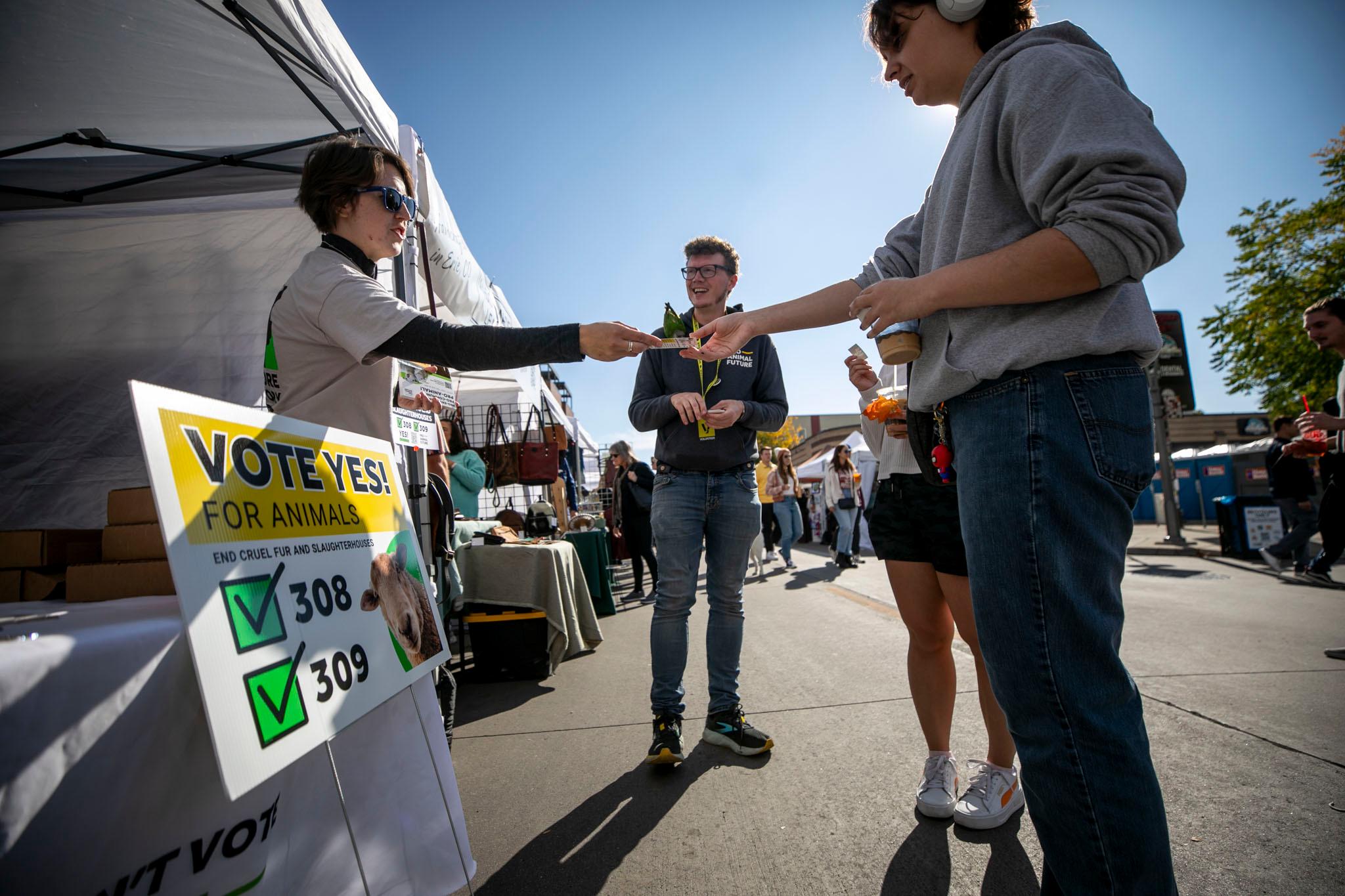
Animal rights advocates with the advocacy group Pro-Animal Colorado turned in more than 16,000 signatures — just over 11,000 of which were valid — to put the question on the Denver ballot. The same group previously made unsuccessful attempts to ban fur sales and slaughterhouses in 2024.
This time, the advocates’ aim is more niche: banning the sale and production of fatty fowl liver, better known by its French name, foie gras.
Foie gras is the liver meat produced by force-feeding ducks and geese. The French delicacy has a reputation among some consumers as delectably rich and buttery, and among animal rights advocates as utterly inhumane.
Denver voters will consider a proposal that would prohibit individuals from force-feeding birds to enlarge their livers beyond normal size or hiring someone to do so. Additionally, restaurants, grocery distributors and others could no longer sell foie gras.
“Eliminating the production and sale of force-fed products from the marketplace is in our city’s interest and authority to reduce animal cruelty, unsustainable environmental practices, and spread of zoonotic disease, and to uphold our city’s values of humane animal treatment, public health, and environmental stewardship,” the measure states.
The proposal condemns the practice of injecting excess feed down a bird’s esophagus, declares foie gras as a danger to workers and the environment, and states that foie gras is a health hazard for humans.
Those who violate the rules would be fined between $1,000 and $5,000, and each violation would be deemed a separate offense. Businesses that violated the ban repeatedly could lose their license for up to six months.
If voters approve the ban, it would go into effect on July 1, 2027.
Olivia Hammond, a spokesperson for Pro-Animal Colorado, previously said that Denver doesn’t have any factories or farms that force-feed birds, but added that the proposal’s language would ban any facilities from opening in the future. Meanwhile, she said, up to 15 restaurants in Denver serve products derived from force-feeding, depending on the season.
Here’s how the last campaign went:
In 2024, the group fell short of its goals of banning fur sales and slaughterhouses in the city.
- The fur vote failed 42 percent to 57 percent.
- The slaughterhouse vote failed 36 percent to 63 percent.
- Pro-Animal Denver (as the group was known at the time) raised $352,045. Fur and slaughterhouse supporters raised more than $2 million.
Several countries, including Brazil, the United Kingdom and Germany, ban either force-feeding or the production of foie gras. California lawmakers passed a bill to ban force-feeding and foie gras in 2004, which has been constantly challenged in courts.