
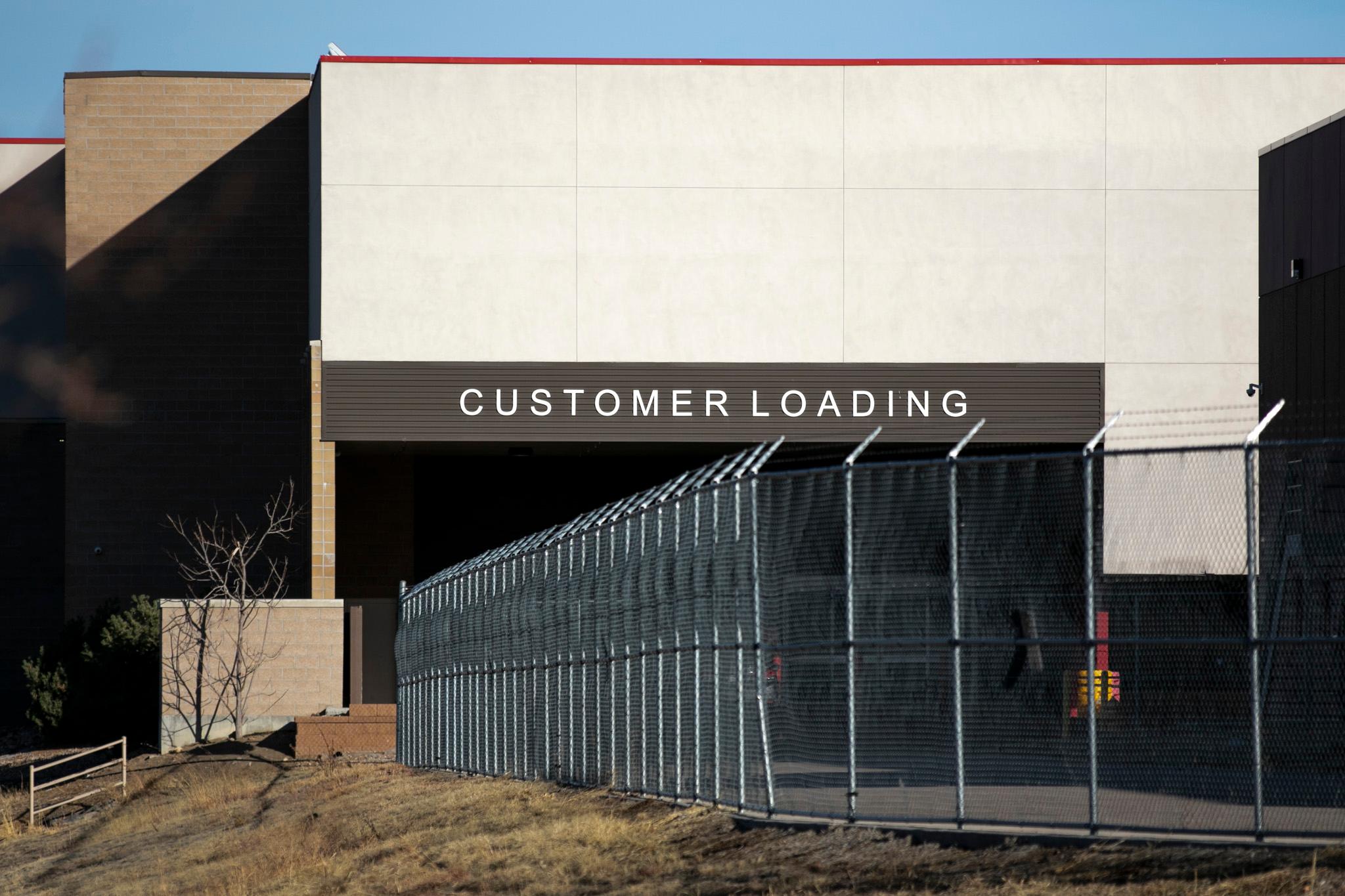
A coalition of advocacy groups on Monday released a report outlining brutal conditions inmates say they experience at the GEO Group's 1,532-bed Aurora Immigration and Customs Enforcement detention center.
Organizers hope the report fuels the effort to shut down the facility and free the people inside — an outcome they insist is possible, even as Immigration and Customs Enforcement expands its detention facilities nationwide, including in Colorado.
The organization says the report is an extension of the oversight efforts of Democratic Rep. Jason Crow.
The organizers took testimony from 31 detainees who expressed concerns about poor medical treatment, unlivable conditions, abusive guard behavior and poor nutrition.
In the mix:
- A persistent failure to adequately treat inmates’ health issues with medicine beyond a single dose of Ibuprofen
- A proliferation of diagnoses for serious mental health conditions like schizophrenia that inmates had never suffered from before
- An overall lack of sufficient calories and vegetables
- Verbal and physical abuse by guards
- Extreme temperatures
- Forced labor
“GEO strongly disagrees with these allegations, which we believe are instigated by politically motivated outside groups as part of a campaign to abolish ICE and end federal immigration detention by attacking the federal government's immigration facility contractors,” the detention operator wrote in a statement.
One of the groups that coauthored the report, the American Friends Service Committee, has fought the private operation of the ICE detention facility for nearly two decades.
Health concerns
Detainees seeking health care in the GEO facility described receiving devastating misdiagnoses and prescriptions for the wrong medicines.
People suffered from chest pain, body pain, uncontrollable vomiting and headaches, said V Reeves of the housing advocacy group Housekeys Action Network Denver. The response, detainees reported: a single dose of Ibuprofen.
“They are not able to receive further treatment, and this results in people suffering and having conditions that are not detected and deteriorate quickly,” Reeves said at a press conference on Monday.
Mental health issues are exacerbated by detention, and treatment is inadequate, detainees reported.
They “talk about feeling afraid, bored, insane, lonely, panicked, sad and traumatized,” Reeves said. “They talk about how severe PTSD is exacerbated by being detained. They talk about folks who are screaming throughout the night and never receiving treatment or support for that.”
Inmates reported they visited the medical center to talk about a physical issue and instead received a psychiatric evaluation, Reeves said. They receive diagnoses they never had before, including serious issues like schizophrenia.
“Those sorts of conditions and those labels can have an adverse impact on people's actual immigration cases,” Reeves said.
GEO maintains that its Aurora facility offers competent medical care and refutes these allegations.
“At locations where GEO provides health care services, individuals are provided with access to teams of medical professionals including physicians, nurses, dentists, psychologists, and psychiatrists,” the agency wrote. “Ready access to off-site medical specialists, imaging facilities, Emergency Medical Services, and local community hospitals is also provided when needed.”
Living conditions
Incarcerated people described poor sleeping conditions, exacerbated by extreme cold and too few blankets, along with loud TVs and bright lights. Temperatures were often too cold in the summer and too hot in the winter, detainees reported.
GEO’s “volunteer work” program, where people earn $1 a day, felt more like forced labor to multiple detainees, who said they would be punished if they did not participate. Advocates likened the program to “sharecropping.”
“Respondents noted that the kitchen service prepares food for roughly 1,200 people daily and requires a wake-up time of 3 a.m.,” the report states. “As for laundry service, clothes are washed once per week and often get mixed up, resulting in people unwillingly sharing clothes and further facilitating the spread of disease.”
A 30-minute phone call costs detainees $5 – an entire week’s wages. A packet of ramen cost more than three days’ wages. And a can of chicken cost more than 17 days’ wages, according to the report. Advocates argue GEO is exploiting their labor and overcharging for items at the commissary.
Inmates described extreme boredom, symptoms of PTSD, and a lack of activities.
But GEO maintains its support services are monitored by on-site ICE personnel.
“In the event issues are identified, we quickly resolve all of ICE’s concerns as required by ICE’s Quality Assurance Surveillance Plan,” a GEO spokesperson wrote.
The guards
Inmates said they were placed in solitary confinement for stretches of time — sometimes when they were a victim of a crime. In solitary, they missed meals and were denied phone calls, commissary use and visits.
Guards treated detainees “like animals,” several people told the investigators.
“I don’t know if they treat us bad because they're racist or because of the color of our [orange] uniforms,” one inmate said in the report. “The new ones are a little worse, they act like they're part of ICE, part of the system, like they've chosen this job just to mistreat us.”
Discipline was meted out in an arbitrary fashion, detainees complained. They threw away personal items and, in some cases, physically and verbally abused them, the report alleges. Finally, if one person broke a rule, an entire group would be punished.
A lack of food
Detainees reported being undernourished.
“Lunch today was a third cup of beans, quarter cup canned corn, one to two pieces of lettuce, a half a piece of bread, and a baby’s spoon-sized serving of something unidentifiable without color, no condiment,” one person said.
GEO is simply not feeding people enough calories, and people are suffering from malnutrition, according to the report. Food is largely processed and lacks variety.
The facility also lacks basic food safety standards, the report alleged. Detainees do the cooking, and they receive little training, the advocates said.
Guards allegedly refused to deliver food to sick people and would pay some detainees with a bag of chips for a day’s work. If the person refused, they would be sent to solitary, according to the report.
Next steps
The coalition hopes the report shines a light on poor conditions at the facility and motivates the Department of Homeland Security to cut ties with GEO.
A GEO spokesperson, meanwhile, maintains the company has played a critical role for 40 years supporting federal immigration enforcement.
“Over the last four decades, our innovative support service solutions have helped the federal government implement the policies of seven different Presidential Administrations,” GEO wrote in a statement.
The company’s contract to operate the jail is up for renewal in October.